The Inactivity or ‘I Can’t’ Zone

The Inactivity or ‘I Can’t’ Zone

“Your attitude is like a price tag, it shows how valuable you are.” Robert Kiyosaki

The attitude of giving up - like I have personally experienced when trying to button my shirt or finish a meal without making a mess due to Parkinson’s - is often characterized by feelings of being overwhelmed, frustration (Been there. Done that!), and a sense of helplessness - as one tends to feel when they are bumping into furniture, or tripping, or falling for no apparent reason. Such feelings often lead to a desire to just throw one’s shaking hands in the air and quit when challenges become difficult. It can be fueled by a fear of failure and a lack of persistence, sometimes stemming from a desire for an easier path, which can ultimately result in a victim mentality and short-lived gratification. In contrast, the "never give up" - I call it the “seeing life from God’s perspective” - mindset is driven by commitment rather than feelings. It helps me reorient myself and fix my eyes on Jesus and focuses on taking responsibility for my response to setbacks, and can often leads to increased resilience and a stronger sense of emotional control.

“The only difference between a good day and a bad day is your attitude.” Dennis S. Brown

The "I can't" attitude is a negative, self-limiting mindset that prevents personal growth, learning, and the pursuit of new experiences. A great question to ask someone is, “When you get to the age of 75 and look back on your life, what will you regret not having at least tried - in spite of Parkinson’s?” It involves believing you are unable to succeed or that challenges are insurmountable, most often due to a fear of failure, and it can be a major roadblock to achieving your goals. This attitude contrasts with a positive, "can-do" mindset, which sees challenges as opportunities and increases the likelihood of success. I would much rather have at least tried to play in the woods with my grandchildren rather than to look back with regret or to play cards with them even though I can no longer shuffle those cards and it drains my brain just to strategize even when playing something as simple as Uno! I hate regret but I love at least trying! That’s just me.

When Parkinson’s raised its ugly head in my life, I went immediately into a state of grief. Grief doesn’t just appear when we lose someone to death. It can be a response to any significant loss, like the end of a relationship, financial loss, job loss, an illness (like PD),or any number of things. I did go through what has become known as the 5 stage is griefs of defined and developed by Elisabeth Kübler-Ross. She intended them to be used as a framework to help one understand their reactions to loss. While I did go through all 5 stages, not everyone does…and they may not go through them in the same order as I did. Let me just run through these stages briefly.

Denial (And, no, I’m not talking about some river in Africa). This is a temporary refusal to accept the reality of the situation. I remember, after undergoing a nerve test in my arm due to the slight tremor I had developed, of hearing the doctor’s mere mention that I could possibly have PD, and saying, “No. I don’t think that’s possible.” I also recall my personal physician, whom I love and count as a good friend, tell me it may just be an essential tremor and love hearing those words because he was not sure I had PD. An essential tremor is a very common movement disorder that is characterized by involuntary, rhythmic shaking or trembling that can affect the hands, head, and voice. Although the cause of ET is not known, they tend to run in families. I reasoned, “No one in my family has ever had these, so it must just be an anomaly.” Don’t ya love self-diagnosis?!

Of course, once I had received the official diagnosis, I went into full-fledged denial, flat-out refusing to accept the diagnosis or its reality in my life. As I have already shared, when I shared with a friend who was a doctor and he asked me to run through my symptoms with him, he looked at me and said, “Jernigan, you don’t have Parkinson’s. You’re just old!” Of course I held on to that thought for quite a while thinking I would find a way to reverse the tremors and imbalance I was experiencing. After a year of this, I then went into my next stage of grief. Anger.

I became so angry that I stopped really living for a while. I was angry at myself for somehow bringing this upon myself - which is a downright stupid thought. I was angry at God for allowing this to come into my life just as our grandkids were getting old enough to play with and go fishing with. As if God was taken by surprise by PD, never once stopping to ask Him about how He wanted to use PD for my good! I allowed my anger to develop into a ‘why me? attitude, which everyone loves to be around…NOT! Rather than lash out at others, I did what any self-respecting introvert would do. I withdrew into myself - and away from those who loved me the most. I stopped staying too long at family gatherings. I stopped taking calls from my friends. I stopped living a full life for a season.

Bargaining - which is the next stage of grief - was not a huge part of my life except for a very brief season. There is one thing that has helped tether me to reality through most of my adult life and that is we cannot change our past. In terms of my Parkinson’s diagnosis, I could not change that so I didn’t

spend much time bargaining or arguing with God. I did, however, ask him to remove this ’thorn’ from my flesh - and for 6 and a half years, I had resigned myself to PD being a constant and active part of my life. The apostle, Paul, puts it much more succinctly than I can:

2 Corinthians 12:5-10 NIV says, 5 “I will boast about a man like that, but I will not boast about myself, except about my weaknesses. 6 Even if I should choose to boast, I would not be a fool, because I would be speaking the truth. But I refrain, so no one will think more of me than is warranted by what I do or say, 7 or because of these surpassingly great revelations. Therefore, in order to keep me from becoming conceited, I was given a thorn in my flesh, a messenger of Satan, to torment me. 8 Three times I pleaded with the Lord to take it away from me. 9 But he said to me, "My grace is sufficient for you, for my power is made perfect in weakness." Therefore I will boast all the more gladly about my weaknesses, so that Christ's power may rest on me. 10 That is why, for Christ's sake, I delight in weaknesses, in insults, in hardships, in persecutions, in difficulties. For when I am weak, then I am strong.”

I prayed Paul’s prayer from my own perspective and got the same answer: "My grace is sufficient for you, for my power is made perfect in weakness." When I am weak, then He is strong. I must add that now that I have had the privilege of DBS in my life, in a way, God HAS removed a great deal of the ‘thorn’ of PD from my life. I will always have PD but now the symptoms have been greatly mitigated by the brain procedure. I no longer deal with tremors. I can work an 8 hour day without brain fog entering the picture. I can even sing and play the piano again (If you heard me now you would hear a marked difference between where I was before the surgery) even though I know I will probably not get back to the level of proficiency I was at before DBS. After all, I am getting old, lol!

The next stage of grief is depression. Here is something I have only recently discovered: I have gone through many bouts of depression in my past without knowing what to call it. I am a very melancholy person. I feel the highest highs and feel the lowest lows - and I love it. Many years ago, I went to my family physician and asked him to prescribe me an antidepressant. He refused, saying, “Where do you think all the music comes from? I’m not going to mess with what God is doing.” I took His advice but still battled occasional times of depression. The only thing I knew to do when those down times came was to change the way I thought about whatever was bringing me down - and the depression would lift. It was not until I sought out counseling during my late 50s that I discovered what I had been experiencing was actually depression. The funny thing is, my counselor asked me to consider the fact that every feeling I have is attached to a thought I am thinking. He encouraged me to change the way I thought. In the world this is called Cognitive Behavioral Therapy, which is a very widely used form of therapy that hopes to improve mental health by addressing unhealthy thoughts, thereby changing one’s emotions and, due to changing emotions, is often able to help an individual change their behavior. In the Christian worldview this is called renewing the mind and have found doing so brings much healing and help when depression tries to raise its head. I take a mood enhancer these days just to help with any latent brain fog but find I am fine without it. I am just no longer in depression over PD and have continued to practice renewing my thoughts. Here is more of what the apostle Paul has to say on the matter:

Romans 12:1-2 NIV, says, 1 “Therefore, I urge you, brothers and sisters, in view of God's mercy, to offer your bodies as a living sacrifice, holy and pleasing to God--this is your true and proper worship. 2 Do not conform to the pattern of this world, but be transformed by the renewing of your mind. Then you will be able to test and approve what God's will is--his good, pleasing and perfect will.” Romans 12:1-2 NIV

This brings us to the stage of grief called acceptance. This is simply that. Acknowledging Parkinson’s reality in my life and learning how to live with it, not just cope with it, but LIVE with it. One of the best things I have done since the diagnosis is to continue to be creative. Rather than being inactive creatively I have chosen to write 3 books on the subject of PD and have written 2 fantasy books for my grandchildren - and that was all before the DBS procedure. I have also continued to be active, working out using an online chair exercise program at least 4 days a week which has helped me maintain my dad-bod figure through it all.

It reminds me of the early days of my songwriting career when one major record company told me no one would ever sing my songs because they were too long or too wordy or too intimate. Just ‘too much.’ My response was, rather than to give up and say, “I can’t do this” became “I’ll continue to write whatever the Lord places upon my heart and leave it up to Him as to how He gets the music ‘out there.’” So far, even after over 35 years of existence for some of these songs, God continues to provide for me and Melinda via royalties from church use as well as many streaming services that now publish them. I have also released 2 new albums since the diagnosis and will continue to do so - even after I am gone. Thank God I made many demos of songs that never made it to an album!

I recently wrote this next portion of the book as a means of explaining to others - especially my grandchildren - how having an attitude of self-learning can go a long way way is preventing one’s self from parking in the ‘I Can’t Zone’.

“Never stop learning because life never stops teaching.” Anonymous

One of the smartest things a person can do for their overall health is to never stop learning. Learning helps keep my eyes off of me and helps me understand the needs of others. Since Parkinson’s affects the mind, I have focused heavily on this in several practical ways which I will get to momentarily.

You should never stop learning because it keeps your mind sharp, improves emotional and physical health, and creates opportunities for social connection and professional growth. Staying engaged with new knowledge boosts memory and problem-solving skills, enhances your ability to adapt to a changing world, and fosters a sense of accomplishment and self-confidence. 

"Once you stop learning, you start dying.” Albert Einstein

It has been shown that self-learning has many cognitive and mental benefits. Self-learning keeps the brain sharp because learning new things challenges the brain, which can improve memory, concentration, and problem-solving skills.

It helps prevent cognitive decline. Continuous learning has been shown to help prevent memory loss and may lower the risk of degenerative brain diseases and Lord knows I’ll take all the help I can get get in this area.

I have personally found that self-learning boosts my emotional well-being. Discovering new passions and skills can lead to greater personal happiness, satisfaction, and self-confidence. I have taken a keen interest in reading the writings of Clint Hill and have gained much knowledge about the Secret Service. Who knew I would love such books and learn so much? 

Self-learning can affect professional and personal growth. I have found that self-learning helps me stay relevant - at least I know how to pray for the world around me.We live in a fast-paced world where learning new skills is essential for staying relevant in your career and keeping up with industry changes.

I believe self-learning increases job security: Acquiring new knowledge and skills can help you become a more valuable and irreplaceable employee, especially in the day of AI. Use AI to help you learn. Self-learning brings a sense of accomplishment: Mastering a new skill or topic can make you feel purposeful and accomplished. 

Of course, there are social and physical benefits to self-learning. Self-learning can help build social connections. Just the other night one of my sons-in-law and I sat around a campfire and talked about different things we have learned about history and this, in turn, led us a to a deeper social bonding - especially over the Roman empire, lol! It was so cool to watch 2 of my grandchildren who were present take great interest in what were talking about as they sat their raptly engaged upon our every word. Learning in a group setting, like a class or workshop, is a great way to meet new people who share your interests.

Self-learning enriches your conversations. A wider base of knowledge gives you more things to discuss with others and helps you understand different perspectives.

Self-learning promotes physical health. Active hobbies that involve learning, such as a new sport, can improve mobility, flexibility, and overall physical health.

Personally, I listen to a lot of podcasts on history and theology. My favorite podcast on theology is called “The Church and Culture Podcast” by Dr. James Emery White and I listen to a ton of books which helps satisfy my love of history, I work The New York Times crossword puzzle, I watch Jeopardy. It’s like I have an insatiable need to learn something new every day. There have been many times when Melinda and I have been watching Jeopardy and I will give an answer like Hadrian’s Wall, the Battle of Hastings, Lech Walesa, or Wallace Simpson - and I will be correct. She just looks at me and says, “How could you possibly know that?” and I will respond with, “I don’t know. I just do.” Yesterday we were watching and this happened and I said, “I don’t know why I know useless trivia. I just had brain surgery.” She said, “You’re brain is amazing.”

God gave our brains. We renew our minds - either positively or negatively - every day. Self-learning helps me maintain discipline in my life and I believe it helps me stay young at heart (and young in mind). Don’t ever think you are too old to learn something new. That day will be the beginning of the end…and people will not want you n their Trivial Pursuit team. Just sayin’!

"Anyone who stops learning is old, whether at 20 or 80. Anyone who keeps learning stays young." Henry Ford

The fee for parking in the ‘I Can’t Zone’ or just plain old giving up is to waste away; an added fee is a loss of purpose which tends to bring hope to one’s life in the sense of having something to look forward to; not having hope tends to give a person no reason to keep on fighting for life. I cannot afford such heavy fees. As William Wallace says in “Braveheart”, "Every man dies, not every man really lives”. I choose life. I just do - whether I tremor, have a foggy brain, or not!

Dennis Jernigan

The above info is from a book I am currently working on called “Parkinson’s & Recreation 3 - The No Parkinson’s Zone”. It is unedited and may have additions made in the final manuscript. Dennis Jernigan

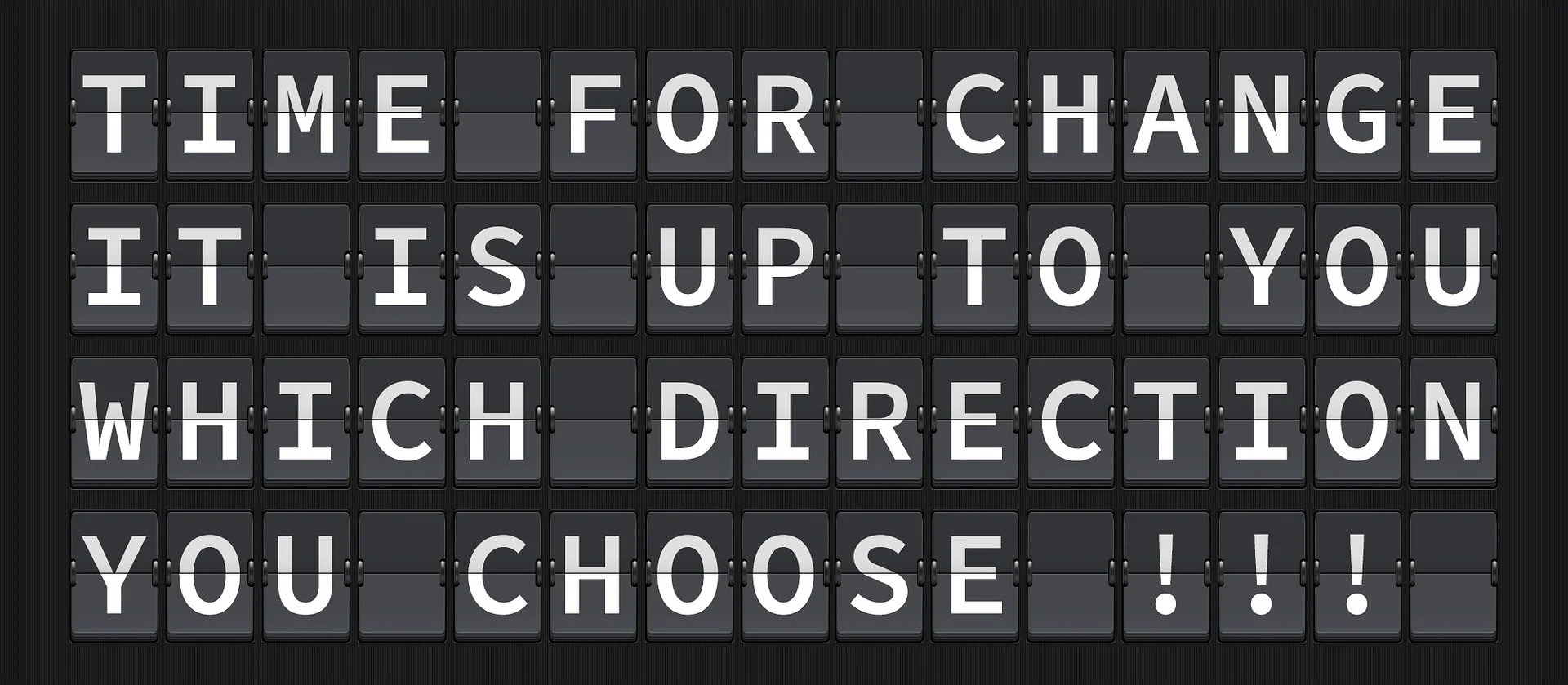
Photo courtesy of https://pixabay.com/photos/do-not-give-up-motivation-life-2015253/

The No Parking Zone of Pride

The No Parking Zone of Pride

“Pride is concerned with who is right. Humility is concerned with what is right.” Ezra T. Benson

Pride goes before destruction,

a haughty spirit before a fall.

Proverbs 16:18 NIV

We hear the word pride tossed around today as a good thing. I would agree that there are times and positive things to be proud of, but I stop short of glorifying sin with the word ‘pride’. There is a good pride. I am proud of the music I have made and the books I have written and the things I have done for the kingdom of God. I am proud of my children and grandchildren. I am proud of my wife…but I cannot attribute pride to anything God calls sin.

Pride has, by far, a more negative side to it. Pride is an excessive, undue, and often arrogant belief in one's own superiority or importance.  For instance, one can take excessive pride in one's physical appearance. Praise is a haughty manner resulting from an overly high opinion of oneself. One has but to look at Hollywood to see this on full display. Negative pride, or hubris, is an excessive, self-centered love of one's own excellence, often considered a sin in theological contexts and leading to disregard for others or a downfall. 

God’s Word makes it very clear what God thinks of pride in James 4:1-7 NIV:

1 What causes fights and quarrels among you? Don't they come from your desires that battle within you? 2 You desire but do not have, so you kill. You covet but you cannot get what you want, so you quarrel and fight. You do not have because you do not ask God. 3 When you ask, you do not receive, because you ask with wrong motives, that you may spend what you get on your pleasures. 4 You adulterous people, don't you know that friendship with the world means enmity against God? Therefore, anyone who chooses to be a friend of the world becomes an enemy of God. 5 Or do you think Scripture says without reason that he jealously longs for the spirit he has caused to dwell in us? 6 But he gives us more grace. That is why Scripture says: “God opposes the proud but shows favor to the humble." 7 Submit yourselves, then, to God. Resist the devil, and he will flee from you.

I believe reality is that all good things are given by God and that all my personal accomplishments I take pride in can be directly attributed to him. He inspired the books I have written. He inspired every song I have penned. He gave me those 9 children. He breathed life into my 13 grandchildren. He brought me the perfect wife for me. He is responsible for any good things I have brought to the kingdom of God. In James 1:17 NIV God spells it out plainly:

Every good and perfect gift is from above, coming down from the Father of the heavenly lights, who does not change like shifting shadows.

One of the greatest examples of a person who ‘got this’ was Corrie ten Boom. Corrie ten Boom was a watchmaker and later a Christian writer and public speaker, who worked with her father, Casper ten Boom, her sister Betsie ten Boom and other family members to help many Jewish people escape from the Nazis during the Holocaust in World War II by hiding them in her home. They were caught, and she was arrested and sent to the Ravensbrück concentration camp. Her most famous book,The Hiding Place, is a biography that recounts the story of her family's efforts and how she found and shared hope in God while she was imprisoned at the concentration camp. She went on to tell her story to millions upon millions of people all over the world. She should have been proud when heaped with praise, but she was the epitome of humility.

Corrie ten Boom had a well-known analogy about receiving praise: "When people come up and give me a compliment, I take each remark as if it were a flower. At the end of the day I lift up the bouquet of flowers I have gathered throughout the day and say, 'Here you are, Lord, it is all Yours.’" She used this "bouquet of flowers" to give glory back to God rather than to herself. 

And just what is humility? Humility is a God-centered, other-focused posture of the heart characterized by recognizing our dependence on God, admitting our own limitations and sinfulness, and valuing others above ourselves, as exemplified by Jesus Christ. It involves a sober self-assessment, a willingness to serve, and an absence of selfish ambition or pride, reflecting a correct understanding of our place before God.

"True humility is not thinking less of yourself; it is thinking of yourself less.” Rick Warren

Miss Corrie recognized that God was opposed to the proud but that He extended grace and mercy to the humble. It seems that the more she expressed humility the more famous she became. Go figure! I believe she understood that she was not placed on this earth for her own good or her own glory, but that she was here to lay down her life for others and, first and foremost, for the Gospel of Jesus Christ.

“The only thing more dangerous than ignorance is arrogance.” Albert Einstein

What I have discovered in my own life is that pride wells up in me because I want to be noticed and because I think more highly of my own than the needs of others. I have all discovered that each time I allow pride to distort my self-importance that the pedestal I have placed myself on tends to crumble and fall and I am left devastated. The remedy that always works is humbling myself before God and others - not in a groveling or insincere way - but in a way that says, “This life is not about me. It is about God and others.” Without fail, God begins to pour out grace and mercy to me and I am compelled to minister to the needs of others in the name of Jesus.

When I have thoughts of irrelevance or lack of purpose is when I start feeling the weight of pride upon my life. This is where arrogance begins to take root in our minds. These thoughts give rise to prideful feelings. When those feelings begin to consume me, I have learned (and I am still learning) that by ministering to the needs of others, I find my own needs are met. I am fulfilled by the love and mercy of God and His presence in my life and I am bathed in a shower of meaningful relevance and purpose.

“Pride is the carbon monoxide of sin. It silently and slowly kills you without you even knowing.” Tim Keller

Arrogance is a haughty, prideful attitude of self importance that disregards God and others. It's seen as an abomination to God, leading to a proud look, self-sufficiency, contempt, and boasting in oneself rather than the Lord. The Bible consistently condemns arrogance, emphasizes its destructive consequences, and calls for humility as its opposite.

What I have found is that people do not like to be around haughty, prideful, arrogant people…unless they are butt-kissers (as we say in the south) and desire the attentions of being ‘seen’ by such people in the hope that they, too, will be seen as something ‘better than’ or ‘more than’. Basically, they want to be seen as important…to have relevance and purpose. What they cannot see is that only by humility can we ever truly discover and enjoy the fruits of what God calls relevant and purposeful. We would do ourselves a world of good by remember why Jesus came in the first place…and then, do the same regardless of how we make a living.

In Luke 19:10 NIV, God’s Word tells us, “…the Son of Man came to seek and to save the lost.”

And just how did He do that? He laid down His life for all of us. I guess the best way to find and live a humble life is to lay our own lives down for the sake of others. Remember, the power of life and death is in the tongue - the words we say. How can yo lay down your life or minister to someone else by the words you say?

The other side of that coin is found in John 10:18. This verse is a direct declaration from Jesus about His authority over His own life: "No one takes it from me, but I lay it down of my own accord. I have authority to lay it down, and I have authority to take it up again. I received this commandment from my Father". This passage emphasizes that His death was a voluntary act, not something forced upon Him. 

Then we find in John 15:13 even more specificity about the matter of laying down one’s life. This verse highlights Jesus' ultimate act of love: "Greater love has no one than this, that someone lay down his life for his friends". It is presented as the highest form of sacrificial love, and Jesus identifies Himself as laying down His life for His followers.

Then in 1 John 3:16, we find this verse explains the significance of Jesus' sacrifice, stating, "We know what love is: Jesus Christ laid down his life for us". By laying down His life, Jesus demonstrated God's immense love and provided a model for how believers should live. 

How can one be prideful when demonstrating love by sacrificing his life for another? He can’t. He will actually find that many others will be drawn to the love of Jesus as a result of their sacrifice…even if that sacrifice should lead to physical death. As I write this portion of the book, it has been 3 weeks since political activist and messenger of the Gospel, Charlie Kirk, was assassinated due to His outspoken faith in Jesus Christ. What we are seeing all across America - and around the word - is astounding. Rather than silencing a major voice for change in our culture, the assassin’s bullet has actually magnified and intensified and opened up Charlie’s message to millions of young people who are having to reckon with the questions Charlie posed by the way in which he lived his life and treated others. They are coming face to face with the realization that hope cannot be found in the political/governmental realm, as many would have us believe. Hope is found in Jesus and Charlie’s sacrifice is extending that hope even in death.

He was, in my estimation, the epitome of humility. Ready to meet Jesus, he opened himself up to meeting the needs of others by very publicly extolling the work of Christ on the cross and by being willing to listen to ANYONE and answer any question, regardless of how vile and mocking and reprehensible those questions might have been. I imagine he is standing very near to miss Corrie right now, lifting up the bouquet of flowers he had gathered throughout the days of his life and saying, 'Here you are, Lord, it is all Yours.'"

Dennis Jernigan

The above info is from a book I am currently working on called “Parkinson’s & Recreation 3 - The No Parkinson’s Zone”. It is unedited and may have additions made in the final manuscript. Dennis Jernigan

Photo courtesy of https://pixabay.com/photos/humble-sign-signage-metal-word-732566/

The No Grumbling and Complaining Zone

The No Grumbling and Complaining Zone

“Be grateful for what you have and stop complaining - it bores everybody else, does you no good, and doesn’t solve any problems.” Zig Ziglar

When I began research on the No Parking Zone of Grumbling and Complaining, I had no idea I would find out so many people had written on the subject. There is a difference in pointing out your pain and constantly harping on it to anyone who will listen. Grumbling and complaining have futile and negative impacts. It, in no way, solves your problem and tends to ruin one's own as well as the days of others. It is a sign of negativity and a lack of agency; of taking responsibility for yourself; of owning what is causing you to grumble and complain.

For so many years I grumbled and complained to God (privately) to ask Him to change my sexual orientation. I’m sure He must not have enjoyed it at all, but was patient with me through it all. What changed my attitude and led me away from grumbling and complaining about it? I realized my sexual orientation had been based on choices I had made - whether consciously or sub-consciously. Guess when my orientation began to change? When I began to take responsibility for my choices and began to make different choices. It’s called maturity.

“Maturity is when you stop complaining and making excuses in your life; you realize everything that happens in life is a result of the previous choice you’ve made and start making new choices to change your life.” Roy Bennett

On November 7, 1981, I had decided Jesus loved me and that He had given mankind a free will; that mankind had brought sin into the world, not God. I walked out of a homosexual identity and straight (no pun intended) into the identity of a new creation in Christ. 2 Corinthians 5:17 NIV, says “Therefore, if anyone is in Christ, the new creation has come: The old has gone, the new is here!” I literally changed my mind that night and walk out of my old identity and into my new.

Did the temptations stop? No. But with every temptation I had a choice to make. Would I listen to it or would I listen to and speak the truth of Who God says I am? Just as I chose to not allow PD to define me, I choose not to allow my temptations to define me. Temptations simply became a launching point for my faith in Christ and I CHOSE to see and think new and different thoughts about who I was and to stop groveling and compiling that PD was not fair to someone who had given their whole adult life to Christ. But wait a minute!

After all was said and done, Jesus - God - came to earth. Fully man and fully God. He was God whose name means “God With Us” and He came to suffer, and to be tempted just as we are (yet without sin). In fact, He bore the entirety of sin for all mankind - past, present, future - to pay the sin debt that separated us from God the Father. Once I understood that, I placed homosexual sin on Jesus and received a new way of thinking in its place. God’s Word calls such a thing renewing the mind. I became so adept at this that eventually my feelings changed. Change the mind and we change the way we feel. If we change the way we feel we can change the way we act. Even modern science finds this ‘renewing of the mind’ as very helpful in treating depression, anxiety, PTSD, and even TBI. The world calls this cognitive behavioral therapy.

"Complainers change their complaints, but they never reduce the amount of time spent in

complaining.” Mason Cooley

Still, I found myself grumbling and complaining to one friend in particular who, I KNOW, was fed up with me always saying things like, “Why did I have to deal with same sex attraction,” or “I have an excuse to whine about people who treat me as if I was still homosexual even after marrying a woman (Melinda) and fathering 9 (It’s true) children.” The reason I know how he felt was because he had gone with me on a ministry trip where I shared my story and I had begun to complain about a perceived ‘slight’ I had detected from a certain man while on our way back to where we were staying. Without warning, he saw a cemetery and told me to ‘pull in’. I was very confused at this request…until he said, “OK. I’ve heard this enough! Pick out a tombstone!” I asked, “Why?” He simply said, “You’e going to pick out a tombstone and then leave the old you buried there. And I never want to hear you complain again about your past! You can’t change it now! Own it! Leave it here…then move on down the road!”

This was somewhere around 1997, some 16 years after I had made my initial decision to walk with Christ. And it dawned on me in that moment how much of a burden and weight I had placed on all those who loved me…and how fed up with my constant grumbling and complaining about this matter must have worn on them. That is why I found it much easier to deal with PD (after going through the stages of grief!). As a friend once told me when dealing with my one of my first panic attacks when I thought I was dying, “So what if you die? Where will you be?” That question pierced my soul, causing me to calm right down because it forced me to face my fear with faith. I said, “I’ll be with Jesus.” She then asked, “And that would be a bad thing?”

"Complaining is a vain way of explaining pain without gaining relief.” Israelmore Ayivor

The deal with PD is that it caused me to withdraw from many family and social gatherings. I say ‘it caused’ but reality is I had to choose to withdraw from family and friends. By not facing my fears of what they might think of me I was choosing not only for myself more pain and anxiety, but I was effectively causing them more pain and anxiety, my pulling away being another way of silently grumbling and complaining. What was I going to do to get out of this no parking zone?

"The pessimist complains about the wind; the optimist expects it to change; the realist adjusts the sails.” William Arthur Wards

As I have already shared, we are people of choice. We may not get to choose our circumstance - or even what tempts us - but we can always choose how we will respond to said circumstances. PD can drive a man or woman to withdraw into themselves, but that is the sure-fire way to kill a relationship. Life requires that we give life and that we receive life in return - and life exchanged always leads to MORE life. That is when I decided the no parking fee for grumbling and complaining was not worth the cost of family and friends. Life with my family and friends is the one of the rewards of facing PD head-on. In a sense, getting the DBS procedure was a way of ‘adjusting my sails’. I saw it as a viable way - even if the surgery killed me - of making the effort to gain the best quality of life, not just for me, but for my family and friends…and that, my friend, was another tombstone moment in my life.

I want to share one more thing with you about how I adjusted my sails in the way I relate to PD. I and writing a fantasy series for my grandchildren in which I share how to face life and it’s circumstances with from a different point of view. In the third book of the series called The Bairns of Bren: Book Three: The Puzzle, I (the old king), have been placed under a spell by an evil sorcerer named Sepeleo Parkinson. It was intended to show my children and grandchildren how my life is still worth living and still enriched even though I find myself under the ‘spell’ of Parkinson’s. The next book is called Winifred and the Watcher in the Woods (will not be available until sometime in 2026) and is intended to help the family see that, no matter what we go through, caring for a family member is never a burden.You’ll have to read them to find out how we resolved the issue of PD! Don’t grumble and complain. Just go buy the dang books and see what I mean!

Dennis Jernigan

The above info is from a book I am currently working on called “Parkinson’s & Recreation 3 - The No Parkinson’s Zone”. It is unedited and may have additions made in the final manuscript. Dennis Jernigan

Photo courtesy of https://pixabay.com/photos/panel-logo-road-sign-man-prison-2091805/

The No Parking Zone of Anxiety and Fear

The No Parking Zone of Anxiety and Fear

“Our anxiety does not empty tomorrow of its sorrows, but only empties today of its strengths.” C. H. Spurgeon

What is anxiety? Anxiety is a common mental health condition characterized by excessive worry, fear, and nervousness. It can manifest in various ways, including: 

Apprehension, dread, nervousness, irritability, restlessness

Rapid heartbeat, sweating, shortness of breath, trembling, muscle tension

Difficulty concentrating, ruminating, negative thoughts about the future

Avoidance of certain situations, panic attacks, difficulty sleeping

Anxiety can be triggered by a wide range of factors, such as stress, life events, or underlying medical conditions. When anxiety becomes persistent and interferes with daily life, it may be considered an anxiety disorder. 

I am a follower of Christ and I believe His Word is true and full of wisdom and has so much to say on the subject of worry. In Philippians 4:6 NIV we find it says, “Do not be anxious about anything, but in every situation, by prayer and petition, with thanksgiving, present your requests to God.” The following post on Instagram by author @MYMINDJOY on September 24, 2025 gives a concise explanation of a Christ-centered view of anxiety and it came from a Christian Mental Health Therapist and can be found at https://www.instagram.com/reel/DNCF0RtsjC4/?igsh=Z2FsbTQ4dTZtcGF4:

“That being said, we need to understand a few things about anxiety before we continue. First of all, the verse, as it is often translated, sounds more like emotional suppression if we don’t include the rest of the verse. We need to talk about Philippians 4:6 because for most of us It is impossible to live without experiencing moments of anxiety because God gave us our nervous system. And guess what? He gave you anxiety as a response to threat and danger to protect you.

God’s Word says ‘don’t be anxious about anything,' not don't be anxious. The original Greek there is saying don't stay in your anxiety to the point where it pulls you apart. That’s what it means in the original Greek. To say don’t have anxiety ever in the first place is literally impossible.

What happens when you tell someone who's anxious, don't be anxious? You make them more anxious. God knows that you're anxious. He is saying don't stay in your anxiety. Don't let it get to the point where it’s pulling you apart and destroying you. The verse then reads, ‘but in everything by prayer and petition let your request be known to God.’ The original Greek there is actually talking about an earnest prayer - a heartfelt prayer. It is a lament. It is pouring your heart out to God. It is speaking of emotional urgency. This is not a cold religious act, it is an honest raw connection with our God which is so much better than just talking about ‘don’t be anxious’.

Then it goes on to say ‘with Thanksgiving, present your requests to God.’ Neuroscience has taught us that the part of our brain that accesses gratitude can actually shift us out of a trauma response and that is hard to do when we try to tell people to jump there instantaneously, as when we said to them, ‘Just be grateful.’  That is wrong for us to put that on people. What we need to say to them is, ‘After you've lamented and poured out your earnest prayer, your earnest lament,’ which actually sounds a lot like therapy, ‘Then that part of gratitude and thanksgiving is more accessible.’

The original context here is speaking to having gratitude at the same time that you struggle. It’s not one or the other. It's both! We hear this all the time in therapy sessions where anxiety is being felt on a Christ-centered level: two things can be true at once. You can have faith and struggle. You can have gratitude while you are still pouring out your lament before the Lord. It’s actually really good for our brain when we have the capacity to do that. It is reminding us of the goodness of God in the midst of our struggle because he wants to be with us right there in the valley. It says let your request be made known to God.

He wants to know your wants and needs. A lot of therapists talk about unmet needs. A lot of trauma has resulted in unmet needs. Unmet needs for acceptance; for love for safety. Sometimes it's tangible like that. They just aren't enough resources like a roof over our head. We are meant to bring needs to God, not just swallow our anxiety. This verse is not emotional suppression. It's an invitation to a raw and vulnerable connection.”

I am a natural worrier, but I have learned to take those thoughts captive. How have I done that? By recognizing that every feeling I have - worry included - is attached to a thought I have had. We are people of choice. We may not have a choice as to our circumstances but we always have a choice as to how we respond to this circumstances. We can actually choose to think new thoughts and if we can think new thoughts, we can change the way we feel and, if we can change the way we feel, we can change the way we behave..

God’s Word also tells us in Romans 12:2 we can be transformed by renewing of our mind. It says “Do not conform to the pattern of this world, but be transformed by the renewing of your mind. Then you will be able to test and approve what God's will is - his good, pleasing and perfect will.” And just how do we do that? We put off the stinkin’ thinkin’ and put on the thoughts of God. To put it another way, we put off the lies we are believing and put own the Truth of  God’s Word.

For instance, when I feel fearful, I put off the lie that says ‘I am all alone in my suffering’ and I put on the Word found in John 4:18 that says, “There is no fear in love. But perfect love drives out fear, because fear has to do with punishment.”

Even if you are not a follower of or believer in Jesus Christ, you will probably be familiar with what is known as the Sermon on the Mount. In the latter portion of that sermon, He addresses worry, saying, “Therefore I tell you, do not worry about your life, what you will eat or drink; or about your body, what you will wear. Is not life more than food, and the body more than clothes? Look at the birds of the air; they do not sow or reap or store away in barns, and yet your heavenly Father feeds them. Are you not much more valuable than they? Can any one of you by worrying add a single hour to your life? And why do you worry about clothes? See how the flowers of the field grow. They do not labor or spin. Yet I tell you that not even Solomon in all his splendor was dressed like one of these. If that is how God clothes the grass of the field, which is here today and tomorrow is thrown into the fire, will he not much more clothe you - you of little faith? So do not worry, saying, 'What shall we eat?' or 'What shall we drink?' or 'What shall we wear?' For the pagans run after all these things, and your heavenly Father knows that you need them. But seek first his kingdom and his righteousness, and all these things will be given to you as well. Therefore do not worry about tomorrow, for tomorrow will worry about itself. Each day has enough trouble of its own.”

Matthew 6:25-34 NIV

As Jesus says so eloquently, “Can any one of you by worrying add a single hour to your life?” In other words, what does worry accomplish? Absolutely nothing!

“Anxiety’s like a rocking chair. It gives you something to do, but it doesn’t get you very far.” Jodi Picoult, “Sing You Home”

  We spend far too much time worrying about things we cannot possibly change. I would rather not worry about my health. I plan on being wise with my health but I do not fret over it - or my lack of good health. I would rather focus on what I have right before me. I have children who need their dad. I have grandchildren who live to lavish their love on me. I have an amazing wife who I enjoy just being with. The No Parking Zone of Anxiety has a ticket cost of the loss of precious time better spent elsewhere. I choose to live with purpose in spite of my health woes. I don’t have time to fret over anything else. Even my eventual death. Why is that? Because I know I will be with Jesus immediately following my last earthly breath.

Here is one of my favorite passages of Scripture that helps me keep my mind from worry. Found in Philippians 4:6-8 NIV, it says, “Do not be anxious about anything, but in every situation, by prayer and petition, with thanksgiving, present your requests to God. And the peace of God, which transcends all understanding, will guard your hearts and your minds in Christ Jesus. Finally, brothers and sisters, whatever is true, whatever is noble, whatever is right, whatever is pure, whatever is lovely, whatever is admirable - if anything is excellent or praiseworthy - think about such things.”

By prayer and thanksgiving (gratitude) let your requests be known to God. And then think about all the good things in your life! Leave all your burdens with Him and have the attitude ‘What’s the worst thing that can happen to me?’ If I die, I’m with Jesus…and I will see all my loved ones who have gone on before me - those who have put their faith in Christ - and I will be reunited with my family eventually anyway…so what do I need to worry about? I can’t change anything about my circumstance - except my attitude. And my attitude is one of gratitude for the many blessings of my life. I even give God thanks for Parkinson’s and the ways in which it has enriched my life. I’m writing this book for you in the hope that it will benefit you on your own journey through the disease…so there’s that.

“Worry often gives a small thing a big shadow.” Swedish Proverb

The bottom line is I cannot change my circumstances. All I can change is my attitude towards them. I cannot afford the parking ticket for parking my thought life in the anxiety zone - the loss of time with my family and friends. As you’ll get used to hearing me say, “Ain’t nobody got time for that!”

Dennis Jernigan

This is a chapter from my upcoming book, “Parkinson’s & Recreation 3 - The No Parkinson’s Zone. It is unedited.

Phot courtesy of https://cdn.pixabay.com/photo/2021/11/01/09/13/sadness-6759823_1280.jpg

The Parking Zone of Laughter - The Good Medicine

The Parking Zone of Laughter - The Good Medicine

Proverbs 17:22 in the NIV, says, 22 A cheerful heart is good medicine, but a crushed spirit dries up the bones.

One of the most healing things Melinda and I have discovered since we are both over 65 now is that we might as well enjoy the ride. We have found laughter to be such a good medicine for our souls and have found one of the healing agents to be bonding and intimacy in ways far beyond the physical. We can, and often do, laugh at ourselves and our situations. Our kids and grandkids are learning to do the same things - not at our expense - but WITH us. I believe this will help them deal with our eventual old age and with our deaths. Several of the children feel so comfortable talking with us about such things that we have had this question asked several times now. “When you are at the end of life, what kind of home do you want to be placed in?” Melinda and I both declare adamantly that we want to grow old and die at home, to which our children always respond, “You didn’t answer my question. What kind of home do you want to be placed in?” Even in our laughter, through such a heavy conversation, we feel very loved.

The Hebrew word found in Proverbs 17:22 for ‘cheerful’ literally means ‘joyful, merry, glad, gleeful’, and is often translated as the word ‘laughter’.

One of my sons, who live near us one the property we have given him, has made it his life’s mission to scare me, and my life’s mission, in turn, is to scare him. He has my permission to film my response in any given moment. More often than not, we wind up laughing more than screaming. Just this morning, he sneaked into the house as I prepared to take some meds in the kitchen and just stood there silently waiting for me to realize he was there watching me. Luckily, I sensed his presence before we got to the hysteria phase.

A couple of weeks ago, I heard him go outside of the barn/workshop and he heard me preparing to leave as well. I decided I would scare him - without thinking he might be trying to do the same to me! I opened the door just in time to see him sliding down into the back seat of my car. My plan had been to sneak up behind him as he got into his car, so I went up to the car window and knocked on it to let him know he would have to try again. Only last year he had hidden in the cargo area of my Kia Sportage and had jumped out as I was pulling down our lengthy driveway. After the appropriate man-scream I began to laugh my tail off. I don’t know why I love this, but I do. I think it is because I feel so secure in who and in Whose I am and that I thrive on the endorphins released in my brain and laughter really does work like a medicine for my soul. The Hebrew word for medicine is literally ‘a cure, a healing’. Laughter can be a healing agent.

In Proverbs 17::22, the word ‘Spirit’ literally means ‘wind, breath, mind, spirit’. We are born with an innate sense - and I believe - need for laughter, deep down in our core identity. Laughing tends to help me gather my breath anew and helps clear my mind of all the clutter that just doesn’t matter.

‘Broken’ literally means ‘broken, stricken, wounded’.

We will all experience times of brokenness. times of wounding, and times of feeling stricken by trials and hard times and sickness. We must fill our personal arsenal with medicines to help us get through such times, Laughter is one of the best medicines I have found to help me and my family get through such times. Laughter triggers a wide range of positive physical, mental, and social effects in the human body. It serves as an immediate stress reliever and contributes to improved long-term health by stimulating organs, boosting the immune system, and releasing beneficial neurochemicals.

Physical effects

A hearty laugh reduces physical tension and stress, leaving muscles relaxed for up to 45 minutes afterward. Personally, the after-effects of a good belly laugh can last for days. I’’l take that any time, Parkinson’s or not!

Laughter increases oxygen intake, which stimulates the heart, lungs, and muscles. This enhances circulation and can protect against cardiovascular problems. During my last visit to our family physician, he told me my heart was in tip-top condition and I could not help but think this was due to all the laughter God has brought into my life.

It causes the body to increase the number of antibody-producing cells, such as T-cells and B-cells, which help fight off infections and disease. I hardly ever get sick - and even when I do - I look for ways to enjoy myself and this often means finding something to laugh about.

Laughter triggers the brain to release endorphins, the body's natural painkillers, which can temporarily relieve pain and increase pain tolerance. Honestly, I have found that laughing tends to dampen the symptoms and pain often associated with PD.

Laughing reduces the levels of stress hormones like cortisol and epinephrine, putting the brakes on the "fight-or-flight" response. Truth is, having Parkinson’s tends to put the breaks on my flight-or-flight response. The truth is, I am so weakened by the illness I could not fight or take flight if I wanted to…which is hilarious to think about.

While not a replacement for exercise, 10 to 15 minutes of laughter can burn a small number of calories and provide an aerobic workout for various muscles, including the diaphragm and abdomen. Need I say more?

Mental effects

Laughter increases the release of "feel-good" chemicals like endorphins, dopamine, and serotonin in the brain, which promote a sense of well-being and can help lift your mood. Who doesn’t want to feel better?

By activating brain areas associated with positive emotions and reducing stress hormones, laughter can lessen feelings of stress, anxiety, and depression. When I am depressed, I often look outside myself and seek to brighten someone else’s day. This takes my eyes off of myself and tends to reduce stress.

Humor provides a healthy coping mechanism, allowing you to see problems in a less threatening light and handle challenges more effectively. By keeping our eyes fixed on the joy Jesus took in me - according to Hebrews 12:2 NAV “for the joy that was set before him endured the cross” - I believe we were the joy set before Him that helped Him endure the cross - I can handle most anything these days.

The increased oxygenation from laughing can help you think more clearly, improve memory, and enhance creativity. This is such a rich mother lode of creativity for me. To be able to laugh in spite of what life throws my way often leads to outbursts of creativity, most often musically and in my writing. I think this has been a major reason I have never really faced writer’s block. There’s simply too much joy when I think of all God has done to get me to where I am today.

Social effects

Shared laughter is a powerful tool for building bonds, strengthening relationships, and fostering emotional connection. Last Wednesday night at our home church gathering, we went around the room sharing things no one else would know about us. This brought up many embarrassing moments and heaps of laughers as we each went around the room sharing. It is so good to laugh with others.

Laughter can help diffuse tension and resolve disagreements. Humor helps you put conflict into perspective and move past confrontations. Most of the time when disagreeing with someone else, I will simply concede to self-effacing humor about myself because it tends to take the wind out of the sails of my detractors and accusers. It just does.

Laughter is contagious, and simply hearing someone else laugh can prime your brain to smile and join in, fostering a sense of connection. Because I am so melancholic, I can find great release in crying with others just as easily as laughing with them…but I prefer laughing. I have found that both tears and laughter can foster a sense of connection and I am not afraid to go either place…which makes me laugh!

Even though the DBS surgery has rendered my tremors and brain fog nonexistent, in some ways our family has been robbed of those humorous moments like when the grandchildren would see my right arm and hand tremoring and would call it my ‘party hand’ or when, during meal time prayers, all the grandchildren would begin to shake their held hands just like me. But we have learned to turn that around, as crazy as that seems, and the grandchildren - or I - will still shake their hands during prayer time with one eye open to see if they are causing the adults to laugh…and generally, they are!

For the past 6 and a half years, I would say I have had moments of having a broken, stricken, wounded, spirit from time to time due to Parkinson’s, and because we are in this together, Melinda has had more than her fair share of those feelings, but I will say that one of the major medicines the Lord has used to bring healing to our wounded spirits is laughter. We have moments where one of us says something that cracks the other up without meaning to…mostly that’s Melinda. I’ve shared this story before but it is worth the time it takes to remind you. She works on designing and building fine custom jewelry. One day she said, “Here. Hold this…but don’t touch it!” I asked her, “How am I supposed to do that?” When she realized what she had said, we both began to laugh uncontrollably - and to this day I still don’t know what she meant…and this makes me laugh even more! We have learned to laugh at ourselves.

A more recent episode that caused us great laughter was as we were preparing for bed. I was trying to read her clues as to whether or not she was being amorous with me…just as she was spraying nasal spray into each nostril. I heard the ‘ssst ssst’ of the spray and asked her, “Is that the sound that you are going to be making to let me know you are ‘in the mood’ or not? She asked me what I meant by that and, of course, I had reenact what had just happened. I said, “Is that your new signal to me that you are wanting intimacy? Ssst ssst?” We began to laugh our heads off and went to bed happy whether or not we had physical intimacy or not. Such is the joy we find in the most mundane and ridiculous moments of life because we have learned to laugh at ourselves.

I have encouraged my grandchildren to learn the intricacies of Dad Jokes and my love of a good pun. Melinda and I have learned to not take even my illness quite so seriously and are learning to laugh at the way growing old is affecting our relationship. We watch a lot of comedy movies - even though this is difficult to do for us with a great deal of all the movies being produced today laced with vulgar language or sexual imagery. There are still many we can turn to for a good evening of laughter. Most of the following were suggested by my children but I concur that are great movies… like “The Princess Bride” or “Reds” or “Red Notice” or “Heads of State” or “Elf” or “Oh, Brother Where Art Thou” or “The Mummy” or “Galaxy Quest” or “Napoleon Dynamite” or “Home Alone” or “Cheaper By the Dozen” or “Nacho Libre” or “Signs” (even though it’s not a comedy I still love the way this movie makes me feel) or “ Second Hand Lions” or Son of Rambow” or “The Princess Diaries” or “Father of the Bride”

I Took Melinda, many years ago now, to see Jerry Seinfeld and was very pleased with how clean and kind he was on stage. It is not difficult to find clean comedians today, thanks to the rise of people like Nate Bergatze. For Melinda’s birthday this year, I took her to see Nate and I literally cried I laughed for so long. In addition, I love Jim Gaffigan, Brian Regan, Leanne Morgan and several others.

Can you tell I love to laugh? I absolutely love to laugh with my grandchildren. It really does go a long way towards healing my wounded spirit. I’ll leave you with some of the very brief jokes I have made for my grandchildren. They often respond with jokes of their own back to me, but I want to give you a few examples of just how easy and healing it is to laugh - even in hard times.

What do you call a snowman who works out? The abdominal snowman.

What goes up when the rain comes down?

Umbrellas.

What is the difference between a teacher and a train? A teacher says, “Spit out your gum,” and a train says, “Choo! Choo!”

What do you call a bear with no teeth? A gummy bear.

Why did the koala eat so much eucalyptus? Because it could not leaf it alone.

What animals can jump higher than the Sydney Harbor bridge? All animals, because the Sydney Harbor Bridge cannot jump!

What does a raincloud wear under its raincoat? Thunderwear.

What happens when it’s raining cats and dogs? You might step in a poodle.

The above info is from a book I am currently working on called “Parkinson’s & Recreation 3 - The No Parkinson’s Zone”. It is unedited and may have additions made in the final manuscript. Dennis Jernigan

Photo courtesy of https://pixabay.com/photos/smile-men-worker-vertically-1591798/

The No Parking Zone of Self-Pity

The No Parking Zone of Self-Pity

"Self-pity is our worst enemy, and if we yield to it, we can never do anything wise in the world”. Helen Keller

As I thought about the purpose of no Parking Zones I could not help but think of certain areas I cannot afford to park my attitude concerning PD. I will list a few I have had to avoid in order to live my best life regardless of whether I have PD or not. I cannot afford the fees of parking in the Self-pity Zone, the Pride Zone, the Anger Zone, the Feeling I Am A Burden to Others Zone, the Panic Zone, the Anxiety Zone, the Inactivity Zone, The I Can’t Zone, or the Grumbling or Complaining Zone.

What is the purpose of a no parking zone? The primary purpose of a no parking zone is to maintain safety, ensure efficient traffic flow, and reserve space for critical functions by preventing vehicles from parking in prohibited areas. These zones are vital for allowing uninterrupted access for emergency services, maintaining clear sightlines for drivers and pedestrians, and keeping roadways open for normal traffic and special events.  

No parking zones are established to prevent accidents by keeping sightlines clear at intersections and crosswalks, ensuring pedestrians have safe passage, and preventing vehicles from obstructing emergency exits or hydrants. 

 By keeping lanes clear of parked vehicles, no parking zones prevent traffic congestion, reduce bottlenecks, and ensure smooth movement for all vehicles, especially in busy areas. 

Areas like fire lanes, hydrants, and hospital entrances are often designated as no parking zones to guarantee immediate and unobstructed access for first responders. 

These zones keep sidewalks and crosswalks clear, allowing pedestrians to move safely and preventing them from being forced into the roadway. 

No parking zones may be created to accommodate turning or merging traffic, allow for construction, or reserve space for special events, such as parades. 

Parking in restricted areas can block driveways, alley entrances, or private roads, which no parking zones prevent. 

In Oklahoma, a no-parking zone violation ticket typically costs between $20 and $70, depending on the municipality. The fine can be significantly higher for violations in specific areas, such as fire lanes or handicapped spots. I have seen parking zones for expectant mothers, which I love.

The No Self-pity Zone

Self-pity is a state of excessive, self-focused sadness and sorrow over one’s own problems and misfortunes, often leading to a preoccupation with one’s own suffering and a feeling that life is unfair. It's an inward-looking emotional state characterized by a feeling of victimhood and a desire for external comfort or attention, which can prevent a person from seeing solutions or connecting with others.

As in the terms of the now-famous video meme “Ain’t Nobody Got Time for That”, I don’t have time for spending what time I may have left on this earth worrying about myself. I have a plan set in place to help me remember to not park in this place. I recognize that every feeling I have is attached to a thought I have had. Therefore, if I change the way I think I can change the way I feel.

Key Characteristics of Self-Pity

Inward Focus: 
 Attention is focused on one's own problems, making it difficult to see others' troubles or maintain perspective. My remedy? I focus on the problems or trouble of others. It is when I choose to do this that my feelings of self-pity tend to fall to the wayside and my life becomes a force for usefulness. The fee or parking ticket for this inward focus is loneliness…ain’t nobody got time for that!

Feeling of Victimhood:

A belief that life is unfair, that others have it better, or that circumstances are beyond one's control. So what if life seems unfair. So what if others have it better than us. So what of we must endure circumstances that are beyond our control. The no parking ticket fee for this one is steep. We can either choose to be a victim or we can choose to be a victor. I know which I choose every time. I choose to be a victor.

Preoccupation with Suffering:

A tendency to dwell on misfortunes, to "wallow" in unhappy feelings, and to become obsessed with what has gone wrong. For me to focus solely on PD and how it has affected me cuts me off from the ones I love and need the most in my life. Nobody wants to be around someone who is constantly wallowing in their unhappiness. The way I do this is to recognize that I am not in this alone. Jesus is called Emmanuel, which literally means “God With Us”! I must choose to look for ways to encourage my wife to live her life in spite of what is going on with me. I encourage her to go out to eat with friends and family without me; I send her to spend time with her mother; I recognize that she experiences care-giver’s fatigue and I do not want that for her. Knowing my wife is well cared for and that her needs are being met keeps me from feeling obsessed with PD. The bottom line is I am never alone throughout whatever course my particular brand of PD may take me.

Desire for Attention/Sympathy:

An unspoken or spoken plea for others to notice and console the individual, which can strain relationships. I see that Melinda is going through as much hardship as I am. I do not seek the consolation of others. I just don’t. I have more than my fair share of people who are rooting for me and who pray for me regularly and that is enough for me.

Inability to Move Forward:

A tendency to feel stuck, to fail to see solutions, and to avoid taking responsibility for one's own life and happiness. No one else is responsible for my attitudes or actions. No one. The only thing that keeps me from moving forward with my life in spite of PD is me! I am constantly thinking of work-arounds for those times when I feel stuck. I am constantly thinking of solutions that keep my heart joyful in spite of my face’s inability to show it at times. I release one or 2 new albums of music through my publisher each year and have had a blast listening to old demos I have never released before and then compiling new collections of songs. I could die tomorrow and nobody would know it because Melinda could keep releasing new albums each year for the next 10 years or so! This I can do whether tremoring or not!

I also choose to fill my time with writing while I still can. I cannot believe I have already written three books on the subject of how to live one’s life with Parkinson’s. I also fill my time with writing fantasy novels for our grandchildren. I am responsible for my attitudes and actions and by focusing my time and brainpower on the needs of others who find benefit in one of the songs I have written or from the pages of one of the books I have written give me a proper focus on life. The ticket for doing otherwise is being stuck in limbo with nothing to look forward to…and ain’t nobody got time for that!

How It Differs from Healthy Emotions

Self-compassion vs. Self-Pity: .

While self-pity involves feeling sorry for yourself and feeling isolated in your pain, self-compassion involves recognizing that suffering is a part of the human experience for everyone, which helps create a greater sense of connection and perspective. 

Healthy Emotional Processing

When engaging in healthy processing, a person acknowledges their feelings and then takes action to address the situation or find solutions, rather than just dwelling on the problem. 

Example

A person who lost their job might feel self-pity by constantly thinking, "Life is so unfair, and it's always harder for me than anyone else," becoming stuck in this negative thinking, and seeking sympathy. A healthier response might be to acknowledge the sadness and disappointment but then create a plan for job searching or skill development. 

The bottom line really is ‘ain’t nobody got time for that’, meaning self-pity. I can’t think of a quicker way to turn people off and turn people away from me than to wallow in self-pity. That’s a costly ticket to have to pay!

Dennis Jernigan

The above infos from a book I am currently working on called “Parkinson’s & Recreation 3 - The No Parkinson’s Zone. It is unedited and may have additions made in the final manuscript. Dennis Jernigan

Photo courtesy of https://pixabay.com/photos/tow-zone-no-parking-no-parking-sign-5108491/

The No Parking Zone of Pain and Suffering

The No Parking Zone of Pain and Suffering

The following is from a book I am currently working on called “Parkinson’s & Recreation 3 - The No Parkinson’s Zone. It is unedited and may have additions made in the final manuscript. Dennis Jernigan

“Only through suffering do we learn.”

Aeschylus - an ancient Greek tragedian/playwright often described as the father of tragedy.

Not only so, but we also glory in our sufferings, because we know that suffering produces perseverance; perseverance, character; and character, hope. And hope does not put us to shame, because God's love has been poured out into our hearts through the Holy Spirit, who has been given to us. Romans 5:3-5

We will all suffer in this life. Some more than others, but we all suffer at some point in our lives. The following post on Instagram by author @MRDARYLBLACK on September 24, 2025 gives a concise explanation of a Christ-centered view of how God’s grace is sufficient in our suffering and his entire explanation can be heard at https://www.instagram.com/reel/DOXQSMXDuvg/?igsh=ZXRmaXRzaHNoZnk1:

“Have you ever heard the phrase that God won't give you more than you can handle? Sounds nice but that's not true. That phrase is actually a misinterpretation of 1 Corinthians 10:13, where Paul says, “God won't let you be tempted beyond what you can bear.” That verse is about temptation, not about the weight of our life’s trials. The truth is God will absolutely give you more than you can handle.

I know because I've walked through seasons, where if I told you even a little bit of what I faced would be shocking to you. And in those moments I didn't say, “Oh, I got this now.” I cried out to God, “I cannot handle this,” and his response was, “Exactly! You can’t, but I can!” You see, if you and I could handle everything, then we wouldn't need God's grace. You can't handle your own breathing! God sustains every single breath in your lungs and that's the point. When life is too much for you, it’s never too much for him. Paul heard God say it this way in 2 Corinthians 12:9, “My grace is sufficient for you for my power is made perfect in your weakness.” James tells us that trials - the stuff that we can't handle are what grows our faith.

God allows more than you can handle so that you'll stop relying on yourself and you'll start leaning on him. I mean just look at the stories in the Bible. My goodness, have you seen that Moses couldn't handle leading Israel out of Egypt until God split the sea. David couldn’t handle Goliath until God guided the stone. Elijah couldn't handle Jezebel until God met him in his depression and gave him strength. Job couldn't handle the loss of everything, but God restored him.

I can keep going. Paul couldn't handle the thorn in his flesh until he discovered God's grace was enough, so let's be honest. You cannot handle it all, but the good news is you don't have to. God never asked you to. He's not looking for your strength. He's looking for your surrender because, while you can't handle it, He can…and He will.”

What is pain? According to most dictionaries, pain is physical suffering or discomfort caused by illness or injury. Pain can be emotional or mental anguish brought on by trauma or loss…like grief.

What is suffering? Suffering is the state of undergoing pain, distress, or hardship often for an extended period of time.

Reality is that pain and suffering tend to go hand in hand. Pain comes by way of some sort of injury. Suffering is the duration of that pain.

I would be lying to you if I said I had not undergone pain and suffering due to PD. Do you think it is easy to have one side of your body (as I do) constantly moving, tremoring, or quaking for 6 and a half years straight? Do you think it is easy falling to sleep while attempting to be still while your right arm is tucked beneath your right leg so as to mitigate the constant churning?

And then there is the toll the disease takes on those around me. Because I do not wish to have people stare at me and pity me, I tend to avoid crowds - even family functions. This takes a great toll on my wife, Melinda, because she loves being around other people.

It is not lost on me when my grandchildren see me shaking and know that, when I disappear to my room, it is because of the PD. I do not want them to think I am leaving the gathering because of them. That thought breaks my heart. The truth is, everyone who care about the PD sufferer suffers right along with them.

I wrote the following over 7 years ago (2018) but felt it was relevant regardless of what you suffer from. The reason this is on my mind is because of the intense physical pain I am undergoing due to a recent total knee replacement. I hate surgery because I have endured so much of it over the course of my life. Several hernia repairs. Two shoulder/rotator cuff surgeries. One knee replacement on my left knee. The aftermath of surgery is what I dread the most. The pain and suffering involved in recovery can be so overwhelming at times…just like the pain and suffering of everyday life can be.

“After so many surgical repairs, I had come to the conclusion that I would never undergo the knife again…until the physical pain in my right knee - you know, the ‘good’ knee - became so unbearable that I had to weigh the reality that this pain would only get worse with the reality that the only way to get better was to have it repaired. I caught the vision for walking without pain and took the plunge and had my right knee replaced, knowing I would suffer for many weeks through the healing process until the painless state of being I longed for was reality for me. I chose to endure pain for the sake of healing. Chose enduring the temporary pain for the sake of ending it once and for all.

Having gone through the loss of my dad only a year before, I had endured the pain of loss - of grief - and honestly was not quite where I wanted to be as surgery drew near. Having gone through this process so many times before, Melinda and I planned ahead for how we would focus on the healing rather than on the pain.

Knowing what to expect and putting a plan into effect made all the difference in the world. We knew the opiates they would prescribe would make my mind cloudy and open to the lies of the enemy. We knew also that the pain meds would clog my bowels. Our plan? Use the pain meds as sparingly as possible and ask God for grace to get off the need for them as soon as possible. I slowly weaned myself from the opiate and had gone completely off dependence upon them by the four-week anniversary of my surgery.”

Another thing we planned to do was to focus my mind on the truth of God’s Word as much as possible. Jesus did this when He was weighing whether or not to endure the pain and suffering of the cross on our behalf. We find this in Hebrews 12:2 where it says, “…fixing our eyes on Jesus, the author and perfecter of faith, who for the joy set before Him endured the cross, despising the shame, and has sat down at the right hand of the throne of God.” Just what was the joy set before Him? I believe it was you and me and the possibility of our redemption as a result of the work of the cross.

Here are a few other things I have suffered through in my life. The Pain of wrong choices. We do not have to give in to temptation. God always makes a way of escape. Always. Yet when we choose to walk headlong into that temptation, we must suffer the consequences.

Another source of suffering for me came through the pain of the glory of God. Since 1988 I have publicly shared about how God delivered me from same sex attraction. I often received death threats and received a lot of hateful things (emails, phone calls, and physical confrontations, etc.) said to me during that time in my life. While I absolutely loved sharing what God has done for me, I secretly had a fear of someone doing me bodily harm, often wondering if someone would just walk up behind me and shoot me in the head while at the piano. Hundreds of time I shared my story while accompanied by armed guards. Such hatred from people who preached tolerance and compassion tends to take a toll on one’s psyche. Now that I have PD, I honestly don’t care what people think. A weird but true perk of Parkinson’s.

Another thing that brings people suffering is the pain of grief. At the time of my dad’s death in August of 2017 I had been completely unprepared for the grief that would engulf me. He and my mom had worked for me for the past 25 years, driving our merchandise literally from one side of the country to the other. He was just one of those guys I thought would always be around. And when he wasn’t, I grieved more than I thought I would.

I also grieved the passing of my spiritual mentor in April of 2021, Jack Taylor, who wrote the best selling The Key to Triumphant Living and my favorite, The Hallelujah Factor. It had been Jack who flew me down to Florida for a week with him in the fall of 2017 so he could minister to me concerning the death of my father. Suddenly, two of the most influential men in my life were now gone and I suffered as a result.

Then there is the pain at the wounding of others. I don’t know about you, but this type of suffering is my least favorite kind. When I served on the board of, at that time, the world’s largest ministry to those who struggled with unwanted same-sex attraction, there came a time when I shared my story with the nation of Jamaica. I held several concerts, spoke on national TV, and was also interviewed by one of the entire nation’s 2 newspapers. The headline of the paper the very next day read ‘Ex-gay Man Says President Obama is Deceived.’ I actually said, “I love president Obama. I pray for president Obama, but I believe he has been deceived by the lies of the enemy. Marriage is intended to be between a man and a woman. He is considering pushing for same-sex marriage. To do so he is messing with the foundation of our culture. I pray for him to receive the truth of God’s Word and to act accordingly.” When I got home, I was asked by the president of the organization I served as a board member of to step down because I had offended some in the gay community. The New York Times even ran an article as did many pro-gay publications. A statement seeking forgiveness - which I did write - was issued to the world on my behalf. I felt thrown under the bus and betrayed and abandoned…and suffered for many months due to the way it was all handled.

Then there is the pain of lingering or ongoing illness, like cancer, MD, ALS, and PD to name a few, which is where I come back to whenever I think of suffering because it is ever present in one’s life. I believe we will all face some sort of suffering throughout the courses of our lives. I think having a positive attitude towards suffering will go a long way in helping us endure it.

The following was written by Google AI after I asked ‘what is the purpose of suffering from a Christ-centered world view?’ and it is representative of what I believe about suffering. In the Christian faith, suffering has the redemptive roles of spiritual growth, transformation into Christ’s likeness, strengthening faith and hope, and demonstrating God’s power in our weakness. While not seen as a desirable experience, it is viewed as a means by which God refines believers' character, deepens their reliance on Him, and brings about eternal glory, a process seen as purposeful within God's larger plan. 

Spiritual Growth & Transformation

Refining Character: 
 Suffering acts as a crucible, testing and refining a believer's character, much like a blacksmith uses fire to purify metal. 


Molding into Christ's Image:

Through shared hardship, believers are transformed into the image of Christ, drawing them closer to Him. 

Strengthening Faith:

Facing and enduring trials tests the depth of a person's faith, revealing whether their hope is genuine and causing them to rely more on God. 

Demonstrating God's Purpose & Power:

Redemptive Purpose: 
 Christians believe that God can redeem and make purpose out of suffering, transforming even the worst events into something good, similar to how the crucifixion of Christ led to salvation. 


God's Power in Weakness:

In moments of weakness and suffering, when individuals feel powerless, God's strength can be more clearly displayed, leading to greater dependence on Him. 

Eternal Perspective:

Suffering is seen as temporary and insignificant compared to the eternal glory that awaits, which far outweighs any earthly trouble. 


A Call to Reliance and Hope

Turning from Idols: 
 Suffering can wean people from relying on worldly comforts and "life-sustaining props," turning them instead to God for true joy and security. 


Fostering Hope:

Just as the Apostle Paul found hope through suffering, Christians are encouraged to view their hardships through a lens of faith and hope, trusting in God's sovereign plan. 

Solidarity in Christ:

Believers are assured that they do not suffer alone, as Christ Himself stands in solidarity with them, especially in their weakest moments.

I have experienced all these different aspects of suffering in the past 6 years of dealing with PD as well as in the everyday course of my life as I have chosen to share my faith publicly. The bottom line is God is good and desires nothing but good things for His followers - even though we must endure pain and hardships from time to time.

Let’s hear once again from @MRDARYLBLACK. This was also posted by him on Instagram in September 2025 and gives an even more concise explanation of a Christ-centered view of how God’s grace is sufficient in our suffering and his entire explanation can be heard at https://www.instagram.com/reel/DLv-RiHse0g/?igsh=MTRwaHN3OGdwaGtvMA==

“If God is real, why does he allow so much so much suffering? That's a good question. My mother died when I was seven years old. She was 31 years old and for me it might be the most traumatic experience of my life so, that's not just a question for years for me for years. It was THE question. If you’ve ever walked through pain or loss of heartbreak or betrayal, you've probably asked that same question, so let me start here.

This question is really emotional before it's intellectual, because it comes from a place of hurt not just doubt, but here's what I've come to understand. The presence of pain doesn't mean the absence of God. Sometimes pain is the very thing that wakes us up to his presence so, here's where we are.

God gave humanity free will because love without choice isn’t love. It's coercion and without free will comes the potential for pain. God could stop every act of evil but he would also have to stop every act of freedom. I've even asked this question. Why doesn’t He just remove all the evil people. Frank Turek said. “If God were to eliminate all evil people at midnight how many of us would still be here at 12:01?” If God stopped every act of evil or suffering, he would also have to stop you and me every time we made a selfish choice because, let's be real. Evil isn't just out there. It's also in here - in our hearts - in our decisions. In our silence. Just think about how quickly evil shows up when somebody cuts you off or offends you. We like to believe we only want justice when the truth is, we want revenge and that's evil. So what makes Christianity different?

God doesn't just sit above suffering. He stepped into it. Jesus, who is God in the flesh, felt the full weight of human pain. He was betrayed. He was abused. He was a beaten. He was abandoned. He was crucified. So, God didn't just allow suffering. He endured it. He endured it for you and for me and for this whole broken world and what Jesus did on the cross wasn't just about forgiveness. It was also about defeating suffering and death forever because one day, according to Revelation 21:4, He will wipe away every tear from our eyes. There will be no more death no more mourning. No more crying and no more pain, So, God is not absent in your pain. He's present in it and he promised to redeem it so the question isn't why is God allowing suffering? The question is who's gonna walk with me through it? And the answer is Jesus.”

The cost of a ticket for parking in the no parking zone of suffering and pain without acknowledging one’s need for God is to miss out on God’s sufficient grace. When we don’t cry out to Him for grace to see us through the pain and suffering we are condemned to continue on in it…and ain’t nobody got time for that!

Dennis Jernigan

The above info is from a book I am currently working on called “Parkinson’s & Recreation 3 - The No Parkinson’s Zone. It is unedited and may have additions made in the final manuscript. Dennis Jernigan

Photo courtesy of https://pixabay.com/photos/no-parking-sign-warning-isolated-2331437/

It Doesn't Take a Genius

It Doesn't Take a Genius

How many times have we heard someone say, “Just use your imagination?” That is a genius question to ask someone who has come up against a brick wall in their endeavor to solve a problem. I think it is a genius question to ask someone who is facing how they are going to approach something like Parkinson’s in a healthy way. For me, I asked myself this question when trying to decide whether or not to undergo DBS surgery. I imagined my life, particularly the quality of life, with Parkinson’s. The more questions I asked the more evident it became to me that as long as I have Parkinson’s (Remember, there is no cure), I would suffer. And while suffering has its place in my human existence, could I imagine a period in my life without the constant tremors that keep me perpetually worn out? The more I read about DBS and the more I talked with people who had experience with it, the more promising the procedure became to me. With DBS there is quite the possibility of improving the quality of my life. I imagined my life without the constant tremors…and it sounded like I had found my answer.

On Friday, August 22, I went in for the initial procedure in which they implanted the electrodes in bi-laterally (both sides of my brain) and on August 25, I went back into the operating room to have the device which would provide the stimulation implanted in my upper left chest cavity, much like a pace maker. As I write this, I am awaiting the activation of the DBS system which should take place on September 12. As Melinda so eloquently put it, “We’re gonna turn him on.” I don’t care who knows. I a looking forward to being ‘turned on’!

Albert Einstein was a theoretical physicist who is probably best known for developing the theory of relativity. You know: E = mc2! Whatever that means. All I know is that he won a Nobel Prize for his work in physics and was a genius mathematician. Even though he never took an IQ test during his lifetime, many estimate his IQ to have been in the range of 160. Again, whatever that means! He was a smart dude. Although his life was not one I would lift up as a role model for being a man of great moral character, he still had some very good insight into what creativity is and can be.

As I did some research on creativity and inspiration, I came across some of his personal thoughts on creativity which made me curious. When I think of physicists or mathematicians (and who doesn’t, duh?), creativity and inspiration are not the first things I think of, but come to find out, there was much more to Albert Einstein than I had originally thought. There are several famous quotes attributed to him on the subject of creativity and inspiration.

He famously said, “Creativity is intelligence having fun”, emphasizing that creative thinking is a natural and enjoyable part of being intelligent. We are each intelligent human beings, created in God’s image, and it doesn’t take a genius to recognize this. We just need to believe God can express Himself by inspiring us in a myriad of ways. For me, writing a new chapter in a book is thrilling - like riding on a rollercoaster and enjoying the ride. For me, writing or receiving a song is absolute joy - like when I see one of my grandchildren running toward me, arms open wide. I give myself permission to have fun with the intellect Good has given me…and I tend to think this has been one of the major ways the Lord has inspired me. It’s so fun to hear others singing one of my songs or to hear how something I have written in a book has led a person to greater freedom in Jesus Christ.

Einstein once said, "The true sign of intelligence is not knowledge but imagination" and "Imagination is more important than knowledge”! I absolutely agree with those quotes…to a point. I believe God gave me my imagination in order to help me know Him and to be known by Him. One of the smartest things I’ve ever done was to get to know Jesus in a personal way. Some of my greatest achievements, whether musically or in my writing, have been born of my imagination. Here’s a great example: I love to imagine the reality of the work of Jesus on the cross because of his great love for me. That use of my imagination has brought me to a place of true reality and true relationship with my God and has inspired thousands of songs and dozens of books.

Einstein believed the power of imagination could drive innovation and discovery. I believe the power of imagination was used by God to inspire me to write and record music and to write books even before anyone ever offered to publish them for me. It was the driving force behind my autobiography and driving force behind exploring other genres in which to convey the love of Christ. I consider that an innovative discovery. So far, I’ve written 7 books in the fantasy genre, thirteen 365 day devotional books, 12 books in both the self-help or autobiographical genre, and several children’s books, along with several others.

Another quote attributed to Einstein says, "Anyone who has never made a mistake has never tried anything new.” If we gave up every time we made a mistake we would never get anything accomplished creatively or otherwise. We need to learn to embrace our mistakes as a necessary part of the creative process…and learn from them.

Einstein also said, ”No problem can be solved from the same level of consciousness that created it.” What does that even mean? I think it means learning to see problems and circumstances from God’s point of view. That means creativity requires thinking outside the box and approaching challenges from new perspectives. It doesn’t take a genius to recognize the truth in that. It just takes faith and we can all walk in that. And now that I think about it, that’s downright genius! We can use our imagination as to how we will respond to, not Just PD, but to the pain and suffering life has a way of handing out to us all at some point or another.

Ready for the journey with me? As I like to say, let’s shake, rattle, and roll!

I will be sharing more about the DBS procedure in the coming days. Stay tuned!

Photo courtesy of https://cdn.pixabay.com/photo/2019/04/15/12/32/einstein-4129246_1280.jpg

Somebody's Watching

Somebody's Watching

Before you read, listen to the song "Watching Over You” for free at https://youtu.be/WLTluzcAVsI?si=oCsVPWPK5xHWaDU4

By the time I was thirteen, I was pretty set in my sexual ways. Finding no solace in relationships because I could never get too close to anyone, I discovered several places of refuge like self-gratification in a sexual manner as well as the refuge of listening to the music of Elton John (read the lyrics to Someone Saved My Life Tonight and you’ll get a good picture of where I was emotionally as a teenager) and others who seemed to have an understanding of my predicament. Perhaps the greatest refuge of all in those days was the home of my grandmother Jernigan.

Grandma lived on the farm with us—next door to our farmhouse—in a trailer house (tornado magnet!). She often told me things of the Lord and reminded me constantly that my musical abilities were a gift from God. I found refuge at her piano, playing literally for hours because of the sheer joy of playing and for the relative peace my soul found during those times. There was an even greater refuge I found at grandma’s house. Grandma herself. She seemed to understand me and went out of her way to nurture my gifts. In the winter-time, she would see me doing my chores in the barnyard, stick her head out her back door, and call to me, “Dennis, when you’re through with your chores come in here and warm up your hands at the piano.” And I would. Those were precious times of refuge and peace...and they were all stripped away when my grandmother died. Being 13 and feeling rejected by God and now abandoned by Him as well, I withdrew even further into my own mind.

I hated going to school. School itself was fine. Scholastically I excelled. It was the times before school, during recesses, or after school when I had to be careful who I hung around with. There was a certain group of boys who really disliked me. These were the ones who called me faggot and queer and any other derogatory word they could think of (and cannot print here).

Needless to say, I found myself looking around corners after class or during times when students would gather before activities began, hoping for at least one day without conflict of some kind. I never knew when some of these guys was going to corner me and make my life not only an emotional hell but a physical one as well. I became so paranoid about it that I couldn’t wait to get home, do my chores, finish my homework, and go to bed. At least when I was asleep no one could hurt me.

One of the special things the Lord did for me in those days was the ability to make myself dream specific dreams. My favorite dream was very out there. In this dream, I lived on the USS Enterprise with my dad, Captain James T. Kirk. Each night I found myself captured by aliens. Just as it appeared the end had come, my dad would swoop into the room, take out the aliens, then set me free...then my mom, Doris Day, would end that dream by singing Que Sera, Sera. Honestly, this dream was what helped keep me sane. As I look back now, I believe God allowed that dream to recur in my mind because He was trying to get me to see that He loved me like Captain Kirk loved me...enough to give everything He had for me because He wanted me for His own.

He had been there watching all along. Because of my inexperience with the things of the Lord and because I had bought into the lies of this world that tell us that man is the highest and that I should have the freedom to do and think anything I desired, I simply did not have eyes to see His hand in my life...or ears to hear His voice...or a heart that would even let Him in! I would soon discover that life is best lived when seen from God’s perspective and not my own. He is God and I am not. It took a long time to learn that.

As you walk further through the writings to come, you will come to understand more and more (at least that is my prayer and hope for you) just how wonderful god’s perspective on life is...regardless of how miserable my past might have been. I encourage you with this: would you consider (at least while you are reading this book) looking at life from more than just your perspective or the perspective of the world. Look at life—even the junk—from His point of view. You’ll be glad you did.

Questions For Meditation

What was life like for you at school when you were younger?

How have those experiences influenced who you are now?

How have those experiences influenced how you respond to hurt? To failure? To disappointment?

What do you think you might see if you somehow saw each of those experiences from God’s point of view?

Even In Their Sleep

As you prepare for sleep tonight, allow the Lord to bring comfort to the hurts of your soul. Give Him access to some of the memories the previous questions may have stirred up.

Listen to the song "Watching Over You” for free at https://youtu.be/WLTluzcAVsI?si=oCsVPWPK5xHWaDU4

Life is best lived when seen from God’s perspective and not my own.

Dennis Jernigan

Excerpt From

Victim to Victor : A Personal Devotional Walk Towards Wholeness with Christ

By Dennis Jernigan

Photo courtesy of https://pixabay.com/photos/father-baby-portrait-infant-22194/

When I Gave Up the First Time

When I Gave Up the First Time

Before you read, listen to the song “Child, I Will Not Forget You” - Listen here - https://youtu.be/AULCz8ptB3I?si=xQOnSxJB-gMdCUZ-

By the time I was nine years old, I had become sexually active...still in the realm of experimenting with other boys...but sexually active. Raised near a small town of about 400 people, same-sex attractions were simply not talked about or tolerated. Of course, there was the young man who flaunted his homosexuality. As if his mannerisms weren’t enough, the halter-tops in summer were pretty much a dead give-away. Seen as a curiosity more than something to be concerned about, this young man was ignored for the most part. “He’s not normal. My kids are fine,” was the “general attitude. This young man’s actions were so blatantly out there it made guys like me seem a little more normal.

At the age of none I had an experience that would—for quite a long time—alter not only my perception of myself, but also my perception of what others thought of it and most importantly, altered my perception of what God was like.

I grew up going to church. My dad was the song leader at our little Baptist church—the same church my grandfather had pastured when my mom (his daughter) was in high school. Because I could play the piano by ear and had grown up knowing the hymns, I began playing for the children’s worship times in Sunday School and eventually began playing for the hymn services in the regular worship times by the time I was about 10 years of age. I loved to play...but, again, my performance brought me respect from those in the generation of my parents...and this made me feel better about myself—and helped take my mind off of what the kids at school said about me.

One Sunday morning after playing the piano for Sunday School, my brothers, cousins, and I ran out of the classroom and up to the front steps of the church building. One of our favorite Sunday activities was jumping off of the wall and running back up the steps and jumping off again and again, pretending we could fly. After all, we all had PF Flyers so we could run faster and jump higher! While we, played the men would congregate next to that wall and talk before the Sunday morning worship time. By this age, I was very interested in what others thought of me so when the conversation of these men focused on homosexuals they had my attention for sure.

These men were men I had grown up admiring. They were good men whom I respected a great deal. Some of these men had taught me Sunday School through my formative years...and I thought they knew everything! As they described what they thought of homosexuals—queers, as they called them—my heart froze in shock. I could feel the heat run through my body as fear began to flood my mind. As they gave their thoughts on what should be done with people like this, I realized they were talking about me! “They didn’t know they were talking about me...but I did. As a nine year old who had just heard something like this, where would “hought they knew everything! As they described what they thought of homosexuals—queers, as they called them—my heart froze in shock. I could feel the heat run through my body as fear began to flood my mind. As they gave their thoughts on what should be done with people like this, I realized they were talking about me! They didn’t know they were talking about me...but I did. As a nine year old who had just heard something like this, where would you have gone for help? What would you have thought of yourself? What would you have thought about God?

On that day, I began to believe several lies that would become detrimental to the formation of my identity as a homosexual. My emotional sensitivity and artistic gifts were somehow good yet somehow abnormal...if these men who knew God so well thought these things about people like me, then God must hate me, too...homosexuality was so disgusting and vile that even God would have nothing to do with me. I would never be able to tell anyone of my struggles. If I did, they would surely not understand. Then it hit me. This was what hopelessness felt like...

After this most eye-opening encounter, I withdrew even more from any semblance of real relationship. Even more than before, I had to perform well in order to be accepted. I had to perform well in order to maintain the facade of normalcy. I had to perform to be loved.

Questions for Meditation

• In what areas of your life are you simply performing for the approval and acceptance and affirmation of others?

• If you were unable to perform to the standards you deem acceptable what would you have left to base your identity on?

• List the moments of your life you have felt utterly helpless. How did you deal with each one?

• How have these incidents shaped your perception of others? of yourself? Of God?

Even in Their Sleep

As you fall to sleep tonight, allow the Lord access to your thoughts. Give Him permission to dredge up old hurts that led to feelings of hopelessness and despair. When you rise in the morning, write down what you saw then set them aside for later consideration.

Listen to the song “Child, I Will Not Forget You" and hear Father’s heart for you. Listen here - https://youtu.be/AULCz8ptB3I?si=xQOnSxJB-gMdCUZ-

Excerpt From the book Victim to Victor by Dennis Jernigan

Drawing courtesy of https://cdn.pixabay.com/photo/2024/03/02/13/28/ai-generated-8608570_1280.png

Prologue and Chapter One - How Did I Get Here? My Journey Toward Wholeness

Prologue and Chapter One - How Did I Get Here? My Journey Toward Wholeness

Prologue

Yes, it’s true. I walked out of homosexuality on November 7, 1981. During that period of my life I had never heard of Exodus International or of any other group that espoused the possibility of freedom from same-sex attractions. I felt so alone yet so hopeful at the same time. Still afraid to share with anyone else the things I struggled with yet so hopeful because I had finally found the only One Who I believed understood me and had as His only agenda my healing and restoration. I was used to being used...so to be confronted in a real way by God’s love—and not feeling used and worthless all the time—led me a deep longing and desire to get to know Someone who would love me like that.

Telling the story of how God led me to freedom is honestly one of my favorite things to do. In the telling of that story I am asked many questions by those who hear it.

The most often asked question?

“Was your healing instant or was it a process?”

The answer? “Yes!”

On the evening I began my journey towards wholeness I believe the power of my sin was broken...but I came to realize very quickly that this journey required many frequent stops for healing along the way. The purpose of this collection of writings I call devotions is to encourage you—regardless of your present circumstances or past failures—would come to find your place in that journey towards wholeness and that you would find many places to stop along the way where you find deep healing for the wounds and rejections you have already experienced in this life. As you read and practice what you find here, know this: I will be praying that you would come to the place I have come to...that knowing Christ intimately (and being known by Him) is worth every struggle you have had to face. I am certain that God will meet you in your own journey and will walk “every step of the way with you...and that ultimately you will come to the place where so much healing has happened that you will then turn around and lead others through that same journey.

Are you ready? I encourage you to begin each session by asking the Lord to give you insight into your own life. After praying this simple prayer, begin listening to the song that serves as the theme of that session. Then read the devotion and Scripture. Then simply answer the questions and meditate on God’s Word. End your session by once again listening to the song. Take it personally as you listen. It’s all for you.

In His Love & Grace,

Dennis Jernigan

Excerpt From Victim to Victor : A Personal Devotional Walk Towards Wholeness with Christ

By Dennis Jernigan

How Did I Get Here?

Listen to the song "Lord, Though the World Rejected Me" before you begin reading Listne for free at https://youtu.be/5fQgbMc1Zbo?si=vftUpYLFmNZl0sk0

How in the world did I ever get here? I was raised in a Christian home...played piano for my church from the time I was a young man...all-star athlete in high school...valedictorian of my graduating class...representative who traveled the nation promoting the Christian University I attended...and homosexual. In reality, I had been living this lifestyle since I was a young boy. Having learned to hide it well, I had convinced myself that I really could lead two lives. My assumption was that everyone seemed to be living two lives.

My sexual journey began at the age of five. Along with the normal experimentation that children experience, I had several other influences that came to bear helping shape my sexuality. When I was five, I had gone into a public restroom. Being a shy kid, I did my business without looking at the man who was at the other urinal. As I was preparing to leave, he turned to me with his pants down and asked me if I would like to touch ‘it.’ I shook my head ‘no’ and quickly ran away from the encounter...but I could not bring myself to tell anyone what had just happened. Why?

Although I could not put words to my feelings at that time, I have since come to believe two things concerning my identity and destiny which came to play in my life at this time. To help you understand what I am about to share and to help you understand how my healing has come, you need to understand what I believe about God. I believe He made me and that He wants nothing but the best for me—and He speaks truth. And I believe God has an “enemy. He is known as Satan—and he wants to destroy me, wants nothing but evil for my life (often disguised as good)—and he speaks lies.

“As I ran from the bathroom encounter my mind began to be filled with thoughts like…

“What’s wrong with me?”

“Why would that man think he could do that to me?”

“Something must be wrong with me.”

And, yes. A five-year-old boy can think those thoughts. I know. I did. This is how my identity and self-concept began to take shape. Along with sexual encounters such as this, I can look back now and see very clearly some of the factors that came into play as my identity took shape.

At an early age, I was gifted with musical aptitude. At an early age, I was blessed with emotional sensitivity and an eye for the artistic and creative. As I entered school, other boys noticed these traits and deemed them feminine...and labeled me a sissy. What I did not realize at the time was that it was God who had given me these very special gifts...and it was the enemy of God who had come alongside and, through his subtle lies, began to pervert the very gifts of God. The very word pervert is not intended to hurt anyone in this instance. In its very “purest meaning, pervert means to distort from the intended use or purpose. I believe God gifted me in ways our culture may consider feminine in a man. In my mind, God gave these gifts to me and the enemy came along and led me to use these very holy gifts in a manner that was less than God’s intended best for those gifts—or for me!

I believe God wanted me to be emotionally sensitive to the needs and feelings of others...and the enemy wanted me to sexualize that sensitivity by focusing my thoughts on me. I believe God blessed me with musical ability and artistic flair in order to use my life to create in ways that would bring glory to Him and healing to others...and the enemy’s desire was to lead me to use those abilities to seek my own glory and pleasure (always sure to couch this way of thinking with how compassionate and tolerant my way of thinking was!). Absurd logically...but where I was in reality.

As if this weren’t enough to set my path toward homosexuality, there was my relationship with my dad. My perception? My dad only spoke to me when he needed me to do something for him...or if he was disciplining me. Never heard him say, "I love you, son." Never remember him hugging me...remember the spankings. Never felt I was pleasing to him...but remember feeling like I constantly let him down. I needed my dad’s approval and acceptance and affirmation...and never felt I received it as a child (I have now. More on that later! God is so good!). As I matured physically, my emotional needs became mingled with my sexuality. Sexually maturing and in need of male affirmation, my mind was constantly bombarded with nothing but what I now consider wrong information. Put simply, I had believed many lies about myself and had convinced myself that this was simply the way I was born.

I had become so self-focused concerning what others thought of me that I took great pains to keep others at an emotional distance. If I let a friend too close, he might discover my attraction to him. If I allowed my dad access to the realities of my attraction to men he would certainly reject me. Being very athletic helped me hide most of the time...and actually helped reinforce my wrong self-perceptions. Whenever I performed well on the athletic field I found great affirmation from the men in my life.

“Good catch, son!”

“Awesome basket!”

“Way to go, boy!”

I actually became very adept at being the best at whatever I did. I found the same affirmation in every arena. Scholastics. Church activities. FFA (believe it or not, I was Napoleon Dynamite before there was a ND!). Even though I loved all these activities, I loved the affirmation and attention more than the activity itself. But what happens when one’s performance doesn’t measure up? Worthless. Failure. Loser. Gifted young man who excelled at all he did. How did I get here? I had believed a lie.

It would be many years before my eyes would open to the reality of God’s love and true identity for my life. Take some time right now to think about the following thoughts and see if maybe, just maybe, you have believed some lies, too.

Questions for Meditation

• Are there any experiences from my childhood that have helped shape my concept of self?

What are some of my self-perceptions that have resulted from these experiences?

• What gift(s) has God placed in my life that the enemy has tried to pervert?

• For what purpose has the Lord given me my gifts and abilities?

• Am I using those gifts for His purpose...or for my own selfish gain/pleasure?

• Is it possible that I believed have about myself? If so, what might those lies be?

• Is it possible that my very own thought processes have led me to believe I was born a certain way when in reality God had other intentions when He created me?”

Even In Their Sleep

As you prepare for sleep tonight, allow the Lord the freedom to search your heart and mind and reveal any forgotten events which may have led to lies you may have believed or any wrong perceptions that you may have come to concerning you identity as a male/female.

Listen to the song "Lord, Though the World Rejected Me" after reading the chapter .Listen for free at https://youtu.be/5fQgbMc1Zbo?si=vftUpYLFmNZl0sk0

DJ’s Thought For the Day

“Knowing Jesus Christ intimately is worth every struggle we face in this life.”

Excerpt From Victim to Victor : A Personal Devotional Walk Towards Wholeness with Christ

By Dennis Jernigan

The Merry-Go-Round

The Merry-Go-Round

When I was a boy, the school I attended had one of those old-fashioned merry-go-rounds. Being a small town, very rural in nature, we did not have a wide variety of playground choices: swings, monkey bars, and that merry-go-round. Of course, every child wanted to ride the merry-go- round simply because of the thrill of the ride. Many were my day-dreamed reveries as I hurried through my classwork so I could envision how I would be able to get to the door before any of the other children once the teacher dismissed us for morning recess—imagining my perfect timing as I leapt from the ground to the floor of the apparatus and claiming my prized place right smack-dab in the middle.

Once the ride was fully occupied, those left waiting for their turn would summarily begin the task of putting said ride in motion. The sheer exhilaration of the experience filled my heart with joy as the wind whipped against my face and the world spun wildly around me. Utter joy. The only problem came when some of the older boys would see us younger children having a bit too much fun in their estimation and decided to make the ride more interesting. I dreaded those moments when the older antagonists would push wildly and relentlessly, faster and faster, mocking the once-joyful children whose faces now spoke sheer dread. We begged to get off as the older boys kept spinning and laughing and mocking as they chided us to go ahead and jump.

Of course, their main goal was to humiliate us to such a degree that we either risked being thrown from the merry-go-round or risked throwing ourselves from the spinning no-longer-joy-ride. Being in the middle was the safest place from my past experiences on the playground ride. Having been thrown and having jumped in past days, I had suffered scraped elbows and knees and a bruised side and ego. I surmised that being in the middle would cause the least damage. Man, was I ever wrong!

Even though I had experienced physical injury and held on for dear life in utter fear in past merry-go-round rides, being in the middle did not afford me any less pain or humiliation or fear. When one is reduced to reacting to life out of fear—regardless of where they are on the ride—the result is always the same. Even though I was not scraped or bruised in the middle, I did become hopelessly nauseous and dizzy—and afraid. The result? Puking all over myself and everyone else in the vicinity, giving the older boys all the satisfaction they had hoped for. Form that day forward, I decided that to avoid the pain and suffering and humiliation and fear, I would simply get off the merry-go-round next time I saw the older boys headed my way. And guess what? The pain and suffering and humiliation and fear were suddenly non-existent!

Our thought-life is a lot like being on a merry-go-round if you think about it. For far too many years, my mind was sent into a constant spin due to the lies I believed about God and about myself. It never occurred to me that I could simply choose to get off the merry-go-round! That is our enemy’s scheme. He plants a thought—a lie—into our mind, and then gives it a big old push, allowing our own fear to keep us glued to the ride. Unlike those older boys who pushed and pushed that playground version, the Liar has but to plant and push the lie into our thought patterns—and we often do the work for him. My personal belief is that the liar is not omnipresent like our God.

He cannot be everywhere at once. He knows that we humans, in our pride and in our fear of what others think of us, will do his dirty work for him! He walks away and allows us to keep pushing our own merry-go-rounds of stinkin’ thinkin’ while he goes on to torment someone else.

So how do we get off the ride of our stinkin’ thinkin’? Quite simply: get off the dang merry- go-round! Stop the stinkin’ thinkin’! Renounce the lies. Replace the lies with Truth and fill your mind with God’s Word—Truth. Surround yourself with people who will love you and speak Truth to you. Speak Truth to your own mind, regardless of how you feel. Otherwise, stay on the merry-go-round and keep getting the same results: pain, sorrow, suffering, despair, self-pity, depression, and whatever the lies lead you to. It’s your choice. It really is.

Dennis Jernigan

Dennis Jernigan

This is an excerpt from the Dennis Jernigan book, Renewing Your Mind: Identity and the Matter of Choice. It can be purchased at https://www.amazon.com/Renewing-Your-Mind-Identity-Matter/dp/1613143737/ref=sr_1_1?crid=1GZNXS5ELN5VZ&dib=eyJ2IjoiMSJ9.AzdEHdBTMOTtUENfsWu4UA.iqW1r7w7iwlGizbjnBz1FgM45tDrmRp4AVQvUh0pUPk&dib_tag=se&keywords=renewing+your+mind+identity+and+the+matter+of+choice+dennis+jernigan&qid=1750857840&sprefix=renewing+your+mind+identity+and+the+matter+of+choice+dennis+jernigan%2Caps%2C151&sr=8-1

Photo courtesy of https://pixabay.com/photos/playground-trees-rural-235579/

The Wreckage of Resentment

The Wreckage of Resentment

If you are breathing, you have been hurt by someone else in some way or another. Those hurts tend to pile up in our minds. So, what do we do with those piled up hurts? We must forgive and move on. Easier said than done, but remember where the battleground is. The battle is in our mind, and bitterness—resentment, unforgiveness—must be dealt with in order to live the healthiest mental life possible.

While meditating on what forgiveness means and what the benefits of forgiveness are to the human soul, I asked the Lord to give me an analogy that would help me understand the power of forgiveness in a very personal way. As I got into my car and headed for town to run some errands, this picture came.

What if…while driving to town, I came to a red light and waited for the light to change? Once the signal turned green, I proceeded into the intersection only to be t-boned by a speeding vehicle. Once the gnarled vehicles came to a stop and the dust began to clear, I realized that I had been severely wounded. I could not move either leg. My arms seemed to be broken and I had experienced very obvious head and internal injuries; yet, I was wide awake and very ultra-aware of my surroundings.

Looking over to the other vehicle now enmeshed with my own, I saw the other driver calmly get out of his car and, obviously intoxicated, walk away without so much as even a scratch! As emergency personnel began to surround me and begin the extrication process, I became incredulous. “Why did he do that? Somebody stop him! He’s getting away! That man did this! Get him!”

But nobody seemed to be listening. Their only intent was in getting me out of that crushed car and getting me the help I needed. But there was a problem. Once they had freed my compacted legs, I refused to let go of the wreckage. “I am not leaving this car until that man pays for what he did!” Confused, the EMTs tried in vain to get me to understand that they could not help me if I would not let go of the wreckage.

As they pleaded with me to trust them, I became ultra-focused on the one who had injured me and not on my need to let go. The EMTs explained very clearly that if I would just let go, they could get me to a very competent surgeon whose specialty was dealing with my particular injuries. In fact, they went on, this physician was the greatest in the world, and he was a short ambulance ride away…if I would only let go. Yet I would not let go.

Having no other recourse, the EMTs and the police had no other choice but to leave me there in my misery and go about their jobs of rescuing those who were willing to leave the wreckage of their lives behind and get help. Pushing my wreckage to the side of the road, seasons passed and months gave way to years, but I kept hanging on to that wreckage because the one that did this to me must pay!

Eventually, I simply learned how to move the wreckage wherever I went, often asking others to help me drag the wreckage along. Somehow, changing the location of the wreckage made it seem better for a while. But the reality was that even though I had changed my location and was feeling some relief, the injuries had never gotten the chance to heal because I was unwilling to leave the wreckage behind and go to the doctor for help. I could say it like this: “Oh, my marriage is hurting...just put me in another marriage and I will be fine”—but all I’ve really done is to carry this stuff into other locations, thinking that will heal me, while the truth is I carry it with me without the possibility of healing. In fact, I’ve moved my wreckage around so much that I don't even remember or know the root of my issues anymore because I have carried it so long. I believe, incorrectly, that I have a current issue—when the truth is that a longstanding issue is the reality. I just refuse to look at it.

The reality was that the one who had hurt me had gone on with his life. Reality was that I had made the choice to stay with the wreckage rather than go on to healing…but everyone knew I was hurt because it was obvious to everyone who passed by. I was the victim. I was the hurt one. Didn’t anyone care?

Such a story would sound like foolishness if it were to happen in real life, wouldn’t it? Yet, the reality is that most of us live that way in relation to our ability to forgive others. Unforgiveness—resentment—is like that. Being unwilling to forgive those who hurt us is like staying with the wreckage after a bad accident. As long as we hang on to that resentment, we cannot receive the healing that the Great Physician offers. So how do we get there?

What exactly does forgiveness mean? Quite simply, it means to release. Unforgiveness, or resentment, means to rethink or to hold on to. As my friend, Pastor Alex Himaya says, “Unforgiveness leaves you stuck in neutral.” How true! As long as we remain stuck in our resentment, it’s like trying to get somewhere in a car that remains in neutral. Unforgiveness gets us absolutely nowhere but deeper in despair. As the 2009 movie “Medea Goes to Jail” so eloquently and humorously puts it, “forgiveness is not for the one that hurt you; it’s for you!”

There have been so many times in my life in which I have been deeply hurt. A year ago I was hurt by someone I trusted deeply, resulting in a depth of hurt that sent me reeling for several months. Saying I forgave them and actually forgiving them were two entirely different matters! I did not want to forgive because the truth was I wanted them to pay for what they had done. Guess what happened? I began to have health issues that I could not attribute to anything but stress. And guess what I could trace most of my stress back to? That’s right. Resentment. Unforgiveness. Not letting go and going on.

After a while, I began to listen to the promptings of the Lord and awakened to what I had been doing. I would never move on unless I let go of the wreckage. I could never receive healing as long as I remained at the debris pile. I could never move on to what God had for me as long as I chose to live in the ruins. Unforgiveness is nothing more than holding someone else in bondage in our hearts as a way to hurt them. The only problem with that is that we are only hurting ourselves and those we are in relationship with. Once I saw what I was doing, I came to the realization that I had only one option. I must forgive.While sitting under the teaching of Alex Himaya recently, my wife and I were very blessed to hear his thoughts on the subject of forgiveness. The next four points were gleaned from what I learned from him. If forgiveness is so good for us, what exactly are the benefits of forgiveness?

1. Emotional Benefit

Resentment kills a fool, and envy slays the simple. (Job 5:2 NIV)

Remember, resentment simply means to rethink an old hurt. When we constantly rethink an offense toward us, we continue to be enslaved to that person and that offense. We are the constant victim and never get to the place of victory. Is that really where life is? Is that really where we want to live—always the whiner? Always the victim? Not I! As Job so eloquently put it, “Resentment kills a fool!” When we are constantly reliving the old offenses, we naturally come to a place where we become numb emotionally. In the most real sense, that is when we are truly controlled by our emotions and held captive there by our stubborn refusal to let the other person go. I discovered that my ability to feel alive had drastically diminished due to my inability to truly forgive and let the offending party go. Once I let go, life and my ability to feel again rushed in! Over the past few weeks of truly forgiving, I have been flooded with insight and music and creativity in general. It’s as if a dam had been broken in my heart. What a benefit!

2. Relational Benefit

Be kind and compassionate to one another, forgiving each other, just as in Christ God forgave you. (Ephesians 4:32 NIV)

When did Jesus forgive us? Before we ever sinned! What was the cross all about? In a very real way, Jesus practiced preemptive forgiveness. What a way to live! He forgave us before we ever existed, and He knew we would reject Him! If I truly want to live the most abundant life possible, I must be prepared to forgive before the offenses of life ever occur. I know that sounds crazy, but it is a scriptural principle. I do not plan to sin, but I do have a plan of attack when temptation comes. I immediately begin looking for the way of escape, because Jesus promised me He would have one for me. When I am hurt and tempted to be unforgiving, I need to be looking for the way of escape. If you think about it, when we forgive someone we give them a gift by letting them go. And we give ourselves a gift by letting them go because this releases us to get the healing we need for the very real hurt we have experienced. Unforgiveness actually binds you to those you don’t forgive, while forgiveness removes the last connection between you and the offense and frees you to move on with your life. Unforgiveness is like being on a treadmill: resentment takes you absolutely nowhere.

One of the ways I know if I have not forgiven someone is if I constantly bring up the same old list of hurts whenever I think of them. If you have a mental offense list that you constantly default to, you have not forgiven. You are still on that treadmill that goes nowhere. So, just how did Jesus prepare us to respond preemptively? Let’s look at the Word of God: Then Peter came to Jesus and asked, “Lord, how many times shall I forgive my brother or sister who sins against me? Up to seven times?” Jesus answered, “I tell you, not seven times, but seventy‑seven times.” (Matthew 18:21-22 NIV)

This was not meant to be the numerical standard of how many times we should forgive. I believe it was meant to be our attitude—that we are to forgive as many times as necessary. To me it means that I need to be prepared to forgive in an instant. Forgiving someone who has offended you puts the ball back in their court and relieves your burdened soul. Forgiveness does not lessen the hurt but it does hasten healing.

When we do not forgive, we effectively dam up our own hearts. Even if no one else can see the resentment, it is still there affecting our ability to relate to others in a healthy way. When we have a blockage in our physical heart, no one can necessarily see it, but every part of our body is affected because the heart’s ability to pump life-giving blood is lessened. We may not see the lack of flow right away, but it is there. If we want full flowing relational life, we must forgive.

3. Physical Benefit

A heart at peace gives life to the body, but envy [resentment] rots the bones. (Proverbs 14:30 NIV)

A study recently conducted at Stanford University discovered what God’s Word has been saying all along: unforgiveness causes physical ailments. This study revealed that resentment and envy are toxic to the body and that forgiving those who have offended you can cut stress by 50 percent. In addition, another study showed that women who had struggled with drug dependency and subsequent relapse were drastically less likely to fall back into drug use when forgiveness was practiced.

Personally I can vouch for my own study. The more I forgive and go on with my life, the less stress I have. The less stress I carry around, the more joy and contentment I feel in my life. The more joy and contentment I walk in, the less likely I am to fall into temptation. The more I let go, the more freedom I have in relating in a healthy, productive way to my wife, my children, my friends, and all those I minister to. Forgiveness really is one of the keys to abundant life.

4. Spiritual Benefit

Jesus lived a lifestyle of forgiveness. I believe this was not only part of the plan for my salvation but part of the plan for me to be a conduit of the greatness of God to others. When I allow the blockage of unforgiveness to remain, I effectively cut off the flow of God’s power in my life. Think about it. He forgave me and saved me. I am created in His image for good works in His kingdom…so if I want to be like Him, I had better learn how to be a good forgiver! The greatness of God is hindered by my resentment.

Unforgiveness builds a dam to the flow of God. Jesus sets us free, but we put ourselves back in prison when we choose to not forgive. Think about this as you read the following passage of scripture: “Therefore, the kingdom of heaven is like a king who wanted to settle accounts with his servants. As he began the settlement, a man who owed him ten thousand bags of gold was brought to him. Since he was not able to pay, the master ordered that he and his wife and his children and all that he had be sold to repay the debt. “At this the servant fell on his knees before him. ‘Be patient with me,’ he begged, ‘and I will pay back everything.’ The servant's master took pity on him, canceled the debt and let him go. “But when that servant went out, he found one of his fellow servants who owed him a hundred silver coins. He grabbed him and began to choke him. ‘Pay back what you owe me!’ he demanded. “His fellow servant fell to his knees and begged him, ‘Be patient with me, and I will pay you back.’ “But he refused. Instead, he went off and had the man thrown into prison until he could pay the debt. When the other servants saw what had happened, they were greatly distressed and went and told their master everything that had happened.

“Then the master called the servant in. ‘You wicked servant,’ he said, ‘I canceled all that debt of yours because you begged me to. Shouldn't you have had mercy on your fellow servant just as I had on you?’ In anger his master turned him over to the jailers to be tortured, until he should pay back all he owed. “This is how my heavenly Father will treat each of you unless you forgive your brother from your heart.” —Jesus (Matthew 18:23-35 NIV)

Another scriptural principle we can apply to the need to forgive is this: we reap what we sow; if we do not forgive, we will not receive forgiveness from others.

Forgive us our debts,

as we also have forgiven our debtors.

And lead us not into temptation,

but deliver us from the evil one.’

For if you forgive men when they sin against you, your heavenly Father will also forgive you. But if you do not forgive men their sins, your Father will not forgive your sins. (Matthew 6:12-15 NIV)

You reap what you sow.

Sow for yourselves righteousness, reap the fruit of unfailing love,

and break up your unplowed ground; for it is time to seek the Lord,

until he comes and showers righteousness on you. (Hosea 10:12 NIV)

You reap what you sow.

Remember this: Whoever sows sparingly will also reap sparingly, and whoever sows generously will also reap generously. (2 Corinthians 9:6 NIV)

You reap what you sow.

Do not be deceived: God cannot be mocked. A man reaps what he sows. The one who sows to please his sinful nature, from that nature will reap destruction; the one who sows to please the Spirit, from the Spirit will reap eternal life. Let us not become weary in doing good, for at the proper time we will reap a harvest if we do not give up. (Galatians 6:7-9 NIV)

Quite simply put, when we do not forgive—when we continually bring up old offenses—we cut off the flow of God and we put ourselves right back in that mental prison where all we know is constant agony and despair. Do we really want to live there?

5. Clear Conscience Benefit

For far too many years, I could not move on with my healing because I could not forgive myself! Just as we forgive others, we must forgive ourselves or we will never move on to the deeper places in God or have that abundant life we talk so much about. To not forgive one’s self is to put yourself in the place of God. To not forgive yourself is not lofty spirituality. It is pride and misinterpretation of God’s forgiveness. To not forgive yourself is to place yourself on the throne of your heart…and you effectively cut off the flow of God in your life. To not forgive one’s self is to say to God, “I know better than you! My standards are higher than yours!” And that, my friend, is dangerous ground to walk.

One of the greatest benefits of forgiving others is a clear conscience. Think about it. Wouldn’t it be great to walk around with a clear conscience, able to hold our heads up high in the sheer joy of that freedom…to be able to look people right in the eye due to the fact that we have absolutely nothing to hide? God forgave me. I must humble myself to receive that forgiveness…and I must humble myself to forgive myself! I love to read of scriptural examples of men who were able to walk in a clear conscience.

Paul the apostle, while standing before the elders, chief priest, and governor said this:

So I strive always to keep my conscience clear before God and man. (Acts 24:16 NIV)

God’s Word also says this about a clear conscience:

Let us draw near to God with a sincere heart

in full assurance of faith, having our hearts

sprinkled to cleanse us from a guilty conscience

and having our bodies washed with pure water.

Let us hold unswervingly to the hope we profess,

for he who promised is faithful.

And let us consider how we may spur one

another on toward love and good deeds. (Hebrews 10:22-24 NIV)

One very important aspects of forgiveness and maintaining a clear conscience is that not only should we forgive those who have offended us, but we must seek forgiveness from those we have offended. While this is not ever the most pleasant thing to have to do, it is one of the most healing things we can do for others. Look at what God’s Word says about this:

“Therefore, if you are offering your gift at the altar and there remember that your brother has something against you, leave your gift there in front of the altar. First go and be reconciled to them; then come and offer your gift. “Settle matters quickly with your adversary who is taking you to court. Do it while you are still with him on the way, or he may hand you over to the judge, and the judge may hand you over to the officer, and you may be thrown into prison. Truly I tell you, you will not get out until you have paid the last penny.” —Jesus (Matthew 5:23-26 NIV)

One more thing: Be careful and don’t ask someone to forgive you if they have no idea you held them in contempt. Be careful and do not direct your need to seek forgiveness at the wrong person. Here is a case in point from my own life: “Dennis, I’ve never struggled with same sex attraction as a Christian, and as a result, I used to hate you for your past. Please forgive me for hating you.” All I hear in those words is, I used to hate you. Such thoughts simmer in my mind needlessly as I wonder if others in the church feel the same way. Why put someone through that torment? Deal with your sin and leave others out of it if it would lead them to wrong thoughts.

Another one I’ve heard: “Dennis, I was really upset at the way you led worship for a long time. Please forgive me for talking about you behind your back.” All I hear is, I and a lot of others talk about you in derogatory ways. My thoughts immediately go to, if he is saying those things, then others are as well. Wouldn’t it have been better to go to the ones you had talked to behind my back rather than fill my head with thoughts of self-doubt and confusion? I’m just saying that sometimes our need to seek forgiveness is directed at the wrong person.

Maybe it would be better to go to those to whom you spread your offensive attitudes to and seek their forgiveness rather than dragging another person into the mess who never even knew your wrong attitude existed. When people have approached me with things that I was never offended by, it gives the enemy a place to attack me. For that reason, let’s be careful and not seek forgiveness from someone just to appease our guilty conscience if it would do more harm than good.

Here are a few questions for meditation that you may find helpful in leaving the wreckage of your resentment behind:

• Who do you need to forgive?

• Are there any areas of your life that you need to seek forgiveness from the Lord?

• Are there any areas of your own life in which you have not forgiven yourself?

• What people have you offended that you need to seek forgiveness from?

In conclusion, I simply urge you to let go of the wreckage of resentment and seek the Great Physician for your healing. Let go and move on. It is in the letting go that you will discover more of that abundant life you have dreamed of…more than you even realized you were missing…more than you realized was even possible in this life. Forgive, and watch yourself come alive.

Dennis Jernigan

This is an excerpt from the Dennis Jernigan book, Renewing Your Mind: Identity and the Matter of Choice. It can be purchased at https://www.amazon.com/Renewing-Your-Mind-Identity-Matter/dp/1613143737/ref=sr_1_1?crid=1GZNXS5ELN5VZ&dib=eyJ2IjoiMSJ9.AzdEHdBTMOTtUENfsWu4UA.iqW1r7w7iwlGizbjnBz1FgM45tDrmRp4AVQvUh0pUPk&dib_tag=se&keywords=renewing+your+mind+identity+and+the+matter+of+choice+dennis+jernigan&qid=1750857840&sprefix=renewing+your+mind+identity+and+the+matter+of+choice+dennis+jernigan%2Caps%2C151&sr=8-1

Photo courtesy of https://cdn.pixabay.com/photo/2015/06/20/13/55/man-815795_1280.jpg

The Process of Healing

The Process of Healing

When faced with the need for healing of our minds—the way we think about ourselves—the enemy would love for us to feel overwhelmed by the mountainous terrain that our stinkin’ thinkin’ raises before us. Let us remember that we are on a journey—an adventure—here and that journeys require time and planning. After all, it may have taken years to build up the mountains of wrong thinking you now experience, so it may take years to tear it down. Like a building that we build with our thoughts, we tend to build it brick by brick. When tearing down that building, it is often necessary to tear it down in the same way: brick by brick, thought by thought. Bottom line? Healing is a process.

The process of healing was brought home to me through the years in very tangible ways, complete with physical reminders of deep spiritual Truths. Many years ago, I was working on my farm with my tractor. Having been grading the gravel road to and from my barn using the box blade scraper, I needed to take the heavy implement off so I could attach the brush hog and do some mowing. A box blade is like a small road grading blade one can attach to one’s tractor and scrape dirt and gravel and the like. While the blade itself is about five feet across and twenty-four inches deep, on the front of the implement are four long spikes called rippers that are spaced in front of the blade. The rippers cut through the ground and break it up, allowing the scraper to then come along behind and scrape the broken ground up. The entire apparatus weighs several hundred pounds.

In a hurry to get to my next task, and having performed the changing of implements many times before, I did not take the time to go through all the necessary safety steps. As I disconnected the hydraulic arm to which the right side of the blade was attached to the reactor, it slipped off before I was ready—because of the vibrations of the still-running tractor. Before I could get out of the way, the blade fell from the tractor and onto my right leg. The ripper did its job, ripping right into my lower calf and pinning me in a very awkward position beneath the large rear tire of the tractor.

My first thoughts? I do not wish to die this way. The tractor was still running and the goats, notorious for climbing on any and everything, were nearby. All I could think—and I am serious about this—was my friends would mock the way I died at my funeral! “Can you believe he was killed by goats?” If I ever needed to be in control of my thoughts, it was in that moment. After several minutes of pleading with the Lord to help me find the strength to remove myself from this entrapment, He came through. As I looked down at the wound, I saw a gaping hole in my leg exposing my tendon, muscle, and bone.

Not realizing I was in shock, I could only think of covering the wound and getting the flap of dangling flesh back in its proper place. Calmly, I pulled the flesh over the hole in my leg and held it there, walking all the way from behind the barn to the house bent over awkwardly while trying to keep the flesh in place. As I neared the house, Melinda came out and I showed her the wound.Wasting no time, she helped me get into the car, and she drove speedily to the nearest ER seven miles away. Nearing the ER, I told her to simply drop me off and park the car while I did the preliminary check-in.

Approaching the nurse station, I told the receptionist that I had injured myself and needed help. She calmly replied, “You’ll need to fill out some paperwork.” Still in shock, I felt overwhelmed to the point I could do no more. Turning around from the window, I simply slumped to the floor beneath the window—and sat. As Melinda came through the door, she asked, “What are you doing down there?” All I could muster to say was, “I need to do some paperwork.” Bursting through the ER door to the triage unit, Melinda shouted, “My husband needs help!” And help came.

Two surgeries later, I was sent home to heal. Miraculously, there were no broken bones. Just nerve damage and the wound itself, which had been nicely stitched closed, seemed merely incidental after the fact. A lot of trauma for such a seemingly small wound. Little did I know but that little wound would have a far-reaching effect upon my life—and the way I think.

After a few days of rest and recuperation, I noticed the bruising around the wound was not getting any better. In fact, the flesh over the wound seemed to be growing darker and darker, fading from deep blue to deeper black. And it began to develop an odor—like rancid, decaying flesh. Since this did not seem right, I went back to the surgeon and showed him my wound. Without saying a word, he simply began to cut away the flesh, once again leaving a gaping hole in my lower calf, revealing the inner parts once again. I asked him, “When can you do a skin graft to cover the wound?” His answer sent holy chills through my being: “A skin graft will not work for this kind of wound. For this type of wound to heal properly, it must heal from the inside out.”

With those words, “It must heal from the inside out,” I knew in that moment that the Lord was going to be teaching me a few deeper things about healing. Confused, I asked him what he meant. I asked him how that could be possible. He then explained to me the process of healing. His instructions, while simple, were full of profound, life-giving Truth. He instructed me to soak the wound twice a day in a bucket of warm water. In that water, I was to mix a cup of Tide detergent and soak for thirty minutes. His explanation for this? The wound needs to be as clean as possible in order to promote healing.

As those words sank into my mind, I could not help but think of and relate this need for cleansing to the human need to confess one’s sins. As I have already stated in a previous chapter, you will know the Truth and the Truth will set you free…but the first step Truth requires is our own honest confession—or cleansing! And the added bonus? Simply learning to rest in—soak in—God’s presence! Awesome in and of itself, but the doctor was not through.

Following up the need for soaking and constant cleansing, he prescribed a large roll of gauze, sterile and clean. I was to pack the wound with said gauze as soon as I was through with my morning soak…packing it as tightly as possible so as to not allow any foreign materials into the wounded place. In addition, he instructed me to pull the gauze out before soaking at the end of the day. Curious, I asked him why. He told me that as I pulled the gauze out—which will probably hurt a bit, but will be worth the pain—any dead and decaying material would adhere to the gauze and be removed from the wound, bringing even more cleansing. Awesome! But wait, there was more!“As you remove the gauze, make the edges of the wound bleed as much as possible.” What?

His words once again sent chills through my soul. “There is life in the blood. The blood will bring life-giving nutrients to the wounded places, and slowly but surely, the wound will gradually close as the flesh grows back.” All I heard was, “There is life in the blood.” Just as with the physical nature of the healing properties of my physical blood, the life of a new creation is healed as the blood of Jesus—the cleansing, redeeming, healing, mind-changing, debt-paying blood of Jesus—is applied to the wounds of our mind by simple faith!

As time went by, my mind was consumed with such thoughts. As my mind began to heal in new ways, so the wound on my leg began to heal. Pondering this process, I understood the need for cleansing. With honest confession comes Truth. Truth sets me free. As I placed my faith in the power of the blood of Jesus Christ, the wounded places in my mind began to come back into spiritual alignment with God’s Truth.

Confession and the blood were easy to see, but I still did not fully understand the need for packing the wound. So I asked the Lord what the packing material for my spiritual, mental wounds was. He simply whispered to my mind, “Son, what did you pack into your wound that came as a result of leaving your past identity?”

Without missing a beat, I said to Him, “What shall we say, then? Am I to continue in sin so that grace may increase? May it never be! How shall I who died to sin still live in it?” That’s Romans 6:1-2.

Before I could say another word, He asked, “And what did you pack in the wounded place when the enemy would threaten you with humiliation and condemnation?” Again, without hesitation, I quoted Micah: Do not rejoice over me, O my enemy. Though I fall I will rise; Though I dwell in darkness, the LORD is a light for me. (Micah 7:8)

And then it hit me. The packing material of my life since being born again had been the Word of God! In every wounded place caused by the lies of the enemy, I had packed the Word of God, and just as with that physical gauze, I would pull the Word out of the wound and drag out more impurities. Then I would repack the wound again and again and again! Healing is a process—and I thought the lessons I had learned from the tractor incident were it…but there was still more.

After a year of healing in my body and in my mind, I was finally well enough to play basketball again. In my first pickup game since my wounding, I was making a cut toward the basket—when someone hit me on the back of my left ankle with what felt like a baseball bat! Sounding like a literal explosion in my mind, the piercing pain sent me spinning around, crumpled, to the floor. Writhing in pain, I shouted to my buddies, “Who hit me? Did you guys see who hit me?”

Confused at my response, one of the guys simply said, “DJ, there was no one near you. No one hit you.”

The MRI later that evening revealed a completely shattered and severed Achilles tendon. Due to the circumstances, we had to wait ten days for the surgery to take place. As soon as I came out from under anesthesia, the surgeon said, “Mr. Jernigan, we did not have enough of your tendon left to put you back together.”

Before he could continue, I moaned, “Oh, no!” in disappointment.

Continuing, he simply said, “But we were able to repair the tear.”

“But, how?” I asked.

“During the time between the wounding and the surgery, so much scar tissue had formed that we were actually able to harvest some of that material and bridge the gap between the wounded places. We put you back together.” By whose scars and wounds and own torn flesh was I granted healing that birdied the gap between my wounded, broken places and the Maker of the Universe? By the scars of Jesus I am being healed! Healing is a process…and scars are like altars testifying to the healing power of God!

What do my scars represent?

When I was a small boy, I was in the pasture petting one of our horses. We called him Big Red. As I petted him, he began to nip at my fingers. This caused great fear in my little heart. Spying the mulberry tree on the fence line, I ran with all my might to the safety of the tree as Big Red kept pace with my little-boy run for my life! Safely climbing the tree to what I thought would be refuge, I was horrified to realize that Big Red could still reach me! My only recourse? I could jump the barbed wire fence to the safety and security of the other side! If there had been an Olympic event called fence straddling, I would have won gold that day.

No sooner had I been released from the ER than my mom asked me how I was doing. My response? “I can’t wait to show the scar to my brothers and my cousins!”

A scar is what’s left of a wound as a reminder that says—in a spiritual sense—“Yes, I went through that terrible, horrible, hurtful event…but look what my God did!” That is a kingdom-of-God perspective on the process of healing. Own your scars, but give glory to God. Rather than those hurtful memories being like stones draped around your neck that drag you down to despair and self-focus, cut them away with the Truth that says, “Yes, I went through that, but see what my God has done!” Healing is a process—a process meant to restore hope and bring healing at every point along the journey.

Even when pain is involved, joy can be the result if the process is seen from the Maker’s point of view. Who made doctors? Who gave man the wisdom to create medicine? Who is the ultimate Healer? The One who made us. One more thing. There is only one time a follower of and believer in Christ should give up hope. We should give up the hope of ever changing our past! Stop trying! It cannot be done. Face it in honest confession and go through the process of healing in the areas of past failure and regret.

Allow the Lord to take the rabble and messes of your life and bring something beautiful out of the rabble and the mess! He is able if we let Him see our wounded places. Open up your heart to Him

and let Him be the Great Physician. He is a safe place for healing to take place. Soak in His presence. Pack the Word into the wounds of your mind. Apply the healing brunets of His cleansing blood to your wounds and allow His own wounding to bridge the gap between you and your Maker.

My final thought: I am healed. I am being healed. I will be healed. Where I am is in process…and the process looks a lot like Jesus!

Dennis Jernigan

This is an excerpt from the Dennis Jernigan book, Renewing Your Mind: Identity and the Matter of Choice. It can be purchased at https://www.amazon.com/Renewing-Your-Mind-Identity-Matter/dp/1613143737/ref=sr_1_1?crid=1GZNXS5ELN5VZ&dib=eyJ2IjoiMSJ9.AzdEHdBTMOTtUENfsWu4UA.iqW1r7w7iwlGizbjnBz1FgM45tDrmRp4AVQvUh0pUPk&dib_tag=se&keywords=renewing+your+mind+identity+and+the+matter+of+choice+dennis+jernigan&qid=1750857840&sprefix=renewing+your+mind+identity+and+the+matter+of+choice+dennis+jernigan%2Caps%2C151&sr=8-1

Photo courtesy of https://cdn.pixabay.com/photo/2019/02/01/01/36/gratitude-3968280_1280.jpg

In Repair, Being Restored

In Repair, Being Restored

My wife, Melinda, has been through much in her own life and journey of renewing her mind.

The following is what she felt led to share to help you along in your journey:

There is a Japanese tradition known as Kintsugi, or “golden repair,” that uses a unique restoration technique for the repair of broken ceramics. The process begins by taking a cracked portion of pottery and mending it with a concoction of powder and precious metals such as gold, silver, and platinum. To facilitate the repair of a broken vessel, the master craftsman recognizes there is beauty hidden in the broken places. He realizes that even the imperfections tell a story that enhances the worth of the vessel, even before the process has begun. The vessel’s worth is not necessarily due to the vessel’s appearance, but in the object itself. Instead of trying to conceal the brokenness, the artisan brings it to the forefront!

So that piece of pottery was me. I was broken, worthless, useless, and ugly—or so I was told and ultimately began to believe. Let me explain. I have always been an “I can make it” kind of girl. I get that attitude both from my mom and my dad. My mom taught me to sew and to use even the scraps others might throw away to create something useful, to meet a need. My dad taught me to cook without a recipe and to try almost any kind of food. He taught me how to sell anything, how to work a room, and how to entertain others. He was gregarious and outgoing, as am I. Due in part to my genetics, but due in part to my need for my father’s affirmation, I tend to be the same way. I used to perform to be accepted. The difference now is that I perform because I am accepted.

My father, as most fathers might attest to, was not a perfect father. My dilemma, even as I write these words, is to honor my father in all I say or do…but I also have the need to tell my story as a means of helping someone else who finds themselves thinking as I did. What tore me down in my past, Father God has used to build me up along the way! My experiences with my dad drove me to the place of trying to hide my hurt and to the ability to sneak behind his back so as to avoid the response to my perceived shortcomings that tended to result in the slap of his hand across my face as he lost his temper. Nothing I ever did was ever right or ever seemed good enough to please him. In such moments, I began to think terrible thoughts about myself: that women are not worth much and need to be beaten into submission…deserving only to be pushed around…verbally put down. My thoughts were that others were not as important as him. This was my example—and my first guide—to who I thought I was. His opinion was beaten into my mind—mostly by his words. If he saw me as ugly, I saw myself as ugly. If he thought I was fat, I saw myself in a similar fashion. My conclusion? I was not worth much to him; therefore, I was worthless.

The verbal abuse hurt the most, because it seemed constant, daily reminding me who my father communicated to me I was—whether intentional or not. No matter what I tried to placate him, I could not “fix” it. The gulf between my need for love and acceptance and my desire to please my father left me feeling desperate, insecure, lost, and alone. This desperation led me right down the path to overcompensation—in everything—just to find even a small glimpse of affirmation, love, gentleness, and acceptance from my dad.

As children most often do, I began to identify myself in the image my father spoke and demonstrated to me. Whenever I messed up, I tried to fix it by performing up to his unreachable standards. I was desperate, insecure, and lost. I felt so alone. I overcompensated in everything just to find even a glimpse of affirmation, love, gentleness, and acceptance from my dad. Over time, I began to cover up those cracks with my performance thinking that could fill the void. I had to be the best, the first, the loudest—to be seen and known. Wanting so badly to have acceptance and the affirmation from my father, but not always being treated with the gentleness and comfort that I so desired and deserved, resulted in my poor choices, my sin. I was performing my way through life, the good church girl, smart student, wearing a mask to hide the disgust and shame I felt. I sought out relationships with men thinking the sexual attention I received would build me up and give me confidence when in reality it just left me feeling frightened and used—alone.

Even though my dad said he loved me, he did not always speak to me or respond to me in tones or actions that expressed that love. As is often the case, hurt people hurt people. The way I thought my father perceived me, along with the lies I had believed about myself, coupled with my sin, brought with it a cycle of self-pity. Every time I had an idea or made a mistake, I put myself down instantly. The image that I had for myself was that “I wasn’t good enough!” Whenever conflict came and I felt attacked, I would run away or burst into tears. My longing was that someone would see me as worth defending—worth fighting for. Because of the lies I had believed, I did not have the sword of God’s Truth to protect myself, nor did I understand that my faith in Christ could be a shield for use in protecting myself. I didn’t have the right tools. I had so many wounds that I didn’t think that anything or anyone could fix them. I had tried and tried. My conclusion? If my dad didn’t think I was worth fighting for, if perfection and performance didn’t work, and sex couldn’t give me what I truly needed, was there even hope?

This way of thinking was of course self-focused and deeply wounding. If my dad could only have seen how much I needed his affirmation—not his condemnation. This was my burden as a girl, and this was my burden through high school and college. Even after Dennis and I met and dated off and on through college, I graduated more confused than ever. My relationship with him had seemed so promising, yet even he had let me down. This loss of hope left me absolutely desperate. Diving right into graduate school, the pressure soon got to me and the Lord began to reveal Himself to me in a very tangible way. In His loving way, He kindly led me to realize I had been placing my hope in the wrong things. My hope is not in what my earthly father thinks of me. My hope is not in my performance. My hope is not in people or possessions. When everything was stripped away from me, I came to realize my hope was in God and in God alone. Just as Dennis was experiencing in his own life, God was working in me the very same things. Through the leadership of the Holy Spirit, we were reunited and married soon after.

Soon after Dennis and I were married, the scars had begun to heal, but the cycle of self-pity still reared up its ugly head every time we argued or I perceived he was not pleased with me or I did not measure up or do something “perfectly.” Those childhood memories stayed with me and haunted my every thought and view I had for and of myself. Some of my cracks were still there, needing repair. I remember the exact day when I had my “lightbulb” moment, my Jehovah Tsidkenu, “He is my Righteousness” enlightenment. We had amazing banners at the church we led worship at. During a time of worship, I was standing under the one that said, “I Am—Jehovah Tsidkenu—I Am Your Righteousness.” The Lord was using this special time of pouring my heart out to Him and declaration of who I am while singing Dennis’s song, “You Are My King”:

You are my King

You are my Righteousness

You are my King

You are my Holiness

You are my King

You are my Sanctity

You are my Lord

You are the God of me

You are my reason for being

You are my King

And in that moment, I got it. I really got it! I am all of these things! In Christ, I am holy because He is Holy! I am Righteous because He is righteous! I am all of who He is because I am in Him. I remember how the room felt, how it smelled, all of my senses responding as if being renewed and awakened and heightened in every way; one of those times when there was no doubt the Lord, by His Spirit, was doing a work in me. But that was only the beginning of my renewal process.

The revelation was there, but now I needed tools to help me fight against the lies and negative thought patterns.One area that I started with was recognizing the lies I was believing about myself. I began to lay out how words that had been spoken to me wounded me; how they had shaped the way I thought, and how I treated and responded to others, good or bad. Being a planner, I use lists to help me visualize my plan for action, so I began to make my own list or Truths to help me visualize and recognize the lies for what they were and to replace them with the Truth of God’s Word. No longer was I without tools of restoration and repair, but I had weapons for the spiritual battle being waged for my mind.

Confession is the first step to being free. Honest confession is me presenting my raw and unrefined heart to Him, trusting Him to make me into who He says I am. In that moment, who I am is like a raw gem—like a diamond in the rough. A diamond requires many cuts to create the prisms or facets that create its brilliance. Even after the cutting away of the rough edges, polishing ensues.

Unseen by the naked eye, there are still flaws. Most cannot be seen without some sort of magnification—but the jeweler, the Maker, knows they are there—so, He keeps refining and crushing and polishing and honing until He reaches the desired design. I can trust my Maker because He is the Master Jeweler. He knows my heart and my intentions, the misunderstood. He gets me when even my own family doesn’t. He loves me even when I am lonely—or I think I am.

Do you filter your thoughts, words, or speech? Do you cover up and share just the good parts or do you really get to the root? Your answer to these questions could be the difference between victory and defeat.

So after cutting off the lies and polishing my heart, what is the Truth? Here is my list:

1. Recognize the lie, put it off, and replace it with the Truth.

2. I cannot control everything.

3. Woundings can be a good thing.

4. I don’t quit.

Sin sees to it that we will be wounded in this life. What we choose to do with those woundings is the difference between life and death. Choose to speak life to your own mind. We are people of choice. Growth—living—is a process of constant restoration. Working through this restoration process won’t be easy and will take time. That is okay. The intimacy and work of the Lord can leave us raw, like right after a tattoo (or what I imagine getting a tattoo might by like), and needs time to heal before the beautiful work is finished and revealed. Like the tradition of Kintsugi used to repair the broken ceramic jar, your process will be a journey of healing and the restoration of beauty. It may not look pretty in the beginning, but using the right materials and tools to bring your soul back to life will require a vulnerability that can only be handled by the Maker, the Heavenly Father—the Master Craftsman and True Artisan of your identity. And don’t expect your heart to look like the original piece. Your heart will shift to make room for new life and additions made through this process. Like the once-broken vessel, you will be restored and made new. You won’t look like you did when the process started, but you will be refined in all of the right places. Your imperfections will be covered by God’s grace, instead of shame Your cracks will be filled with the Truth you speak to yourself every day. I am marked eternally by the Word and the work on my heart and spirit. No one can ever take that away. It is permanent. Now, believe that for yourself. Put on the Truth and be made new.

Melinda Jernigan

This is an excerpt from the Dennis Jernigan book, Renewing Your Mind: Identity and the Matter of Choice. It can be purchased at https://www.amazon.com/Renewing-Your-Mind-Identity-Matter/dp/1613143737/ref=sr_1_1?crid=1GZNXS5ELN5VZ&dib=eyJ2IjoiMSJ9.AzdEHdBTMOTtUENfsWu4UA.iqW1r7w7iwlGizbjnBz1FgM45tDrmRp4AVQvUh0pUPk&dib_tag=se&keywords=renewing+your+mind+identity+and+the+matter+of+choice+dennis+jernigan&qid=1750857840&sprefix=renewing+your+mind+identity+and+the+matter+of+choice+dennis+jernigan%2Caps%2C151&sr=8-1

Photo courtesy of https://cdn.pixabay.com/photo/2024/08/28/18/31/eye-9004866_1280.jpg

In Feelings or Truth We Trust

In Feelings or Truth We Trust

When I was born again...

What changes when we are born again? Our old self dies by faith—and our new self is raised to life in Christ Jesus by faith. Being born again is being brought to life and set upon an incredible journey of discovery. Being born again is the beginning of the most grand adventure that provides the traveler with the most mesmerizing vistas the mind of man could never conceive apart from God! On this journey I have discovered never-ending mountains of His healing, fathomless oceans, and wave upon wave of His love. Forest upon magnificent forest of all manner of life His Truth provides! Every day is a brand new opportunity to explore what it means to be born again. Just take the next step—and be prepared to have your mind blown!

If you are feeling (there’s that pesky word again!) like your life is at a standstill, just take the next step. You never get to your destination unless you take the first—or next—step. Perhaps your current situation and circumstances make you feel like you are living in hell on earth. As Winston Churchill supposedly so famously said, “If you’re going through hell, keep going.” Even those feelings of “hell on earth” are as the result of a thought you are mulling over in your mind. What do we do in such moments? We change our point of view by asking the Lord to show us our hell from His perspective! When we have ascertained that, we put off the wrong thought and exchange it for the right thought...and we do that until the right thinking becomes the overcoming thinking.

The following are some tips and things you will need for the trip:

  1. Map, GPS, personal guide, and roadside assistance, all in one: You will need a guide for your journey—and I have the most wonderful news! The Lord has given us the Holy Spirit to guide us through our spiritual journey. He is better than OnStar! He is always with us. Never sleeps. Never takes a break. We have but to acknowledge Him and He is ready and willing to meet whatever need we have! Walking in the power and filling of the Holy Spirit is like having the world’s best GPS and best roadside assistance possible. He is available day and night, twenty-four/seven. We have but to decide if we will trust Him or trust our feelings. He will never contradict the Word, while feelings often do! 


2. Know your final destination: When taking a journey, we generally have a destination in mind. Our destination? Wholeness in Jesus. How do we get there? We seek Jesus and we follow the roadmap. What is our roadmap? The Word of God. When in doubt, go to the Word! 


3. A traveling companion: The joy of getting there is in the journey—and every journey is made sweeter and joy made more tangible when we have someone to share it with. I know it is redundant, but we are never alone—even if we feel like it! And what do we do when our feelings are messing with our journey? We get to the Truth. And Jesus is the Truth.

4. Provisions: Heading out on our journey, we never know what we may encounter. We may find ourselves stranded by high water or deep snow. Regardless of what tries to hinder our journey, we must have provisions along the way. And guess what? Our traveling Companion is both food and drink! Jesus is the Bread of Life. Jesus is Living Water. We but need to eat and drink of His presence whenever our soul is hungry or thirsty.

5. Extra fuel: From time to time, we will grow tired and weary in the journey, but, again, our Companion provides the filling of power and He even provides rest as we undertake whatever leg of the journey we find ourselves on.

"Take My yoke upon you and learn from Me, for I am gentle and humble in heart, and YOU WILL FIND REST FOR YOUR SOULS. For My yoke is easy and My burden is light.” —Jesus (Matthew 11:29-30)

Now may the God of hope fill you with all joy and peace in believing, so that you will abound in hope by the power of the Holy Spirit. (Romans 15:13)

6. Keep your eyes on the road: While that goes without saying, we need to remember one of the ploys of the enemy is to try and get us focused on the failures of our past. To live our lives according to our past failures is equivalent to driving down the road by looking in the rearview mirror. Doing so leads to nothing but disaster! We use the rearview mirror simply to glance back occasionally to help us keep our bearings. This reminds us of how far we have come and helps us stay oriented on the Truth! 


7. Good music: When Melinda and I travel, we often put on the music of 2nd Chapter of Acts and Keith Green—and sing! There is nothing like worshiping Jesus and singing as if no one is listening to cover the sometimes tedious parts of the journey with sheer joy. Worship helps us maintain our focus on Truth. Truth always set us free and takes our eyes off of us. Sing your way to Truth and to freedom.

8. Do not fear the side trips: Life has a way of taking us down unexpected roads. Rather than dread such momentary side trips, why not turn the point of view around to put on a heart of adventure? Unexpected circumstances are simply opportunities to watch God come through! It is the little spontaneous adventures that often lead to the grandest of vistas and deepest release of joy.

9. Expect grand vistas: The first time I saw the Grand Canyon with my children took my breath away. It was so massive my human brain could not fathom what I was seeing, which made me think I was seeing a grand panoramic painting! As my children stood their mouths agape at the splendor, my heart was ravished with deep joy at sharing this unexpected splendor with those I love most. Our attitude, when traveling with the children, was to make each and every experience the children had a learning experience if possible, regardless of how mundane or non-special the landscape might appear.

When the children were younger—and still at home—we made every trip a lesson of some sort, teaching the children to look at the world from different points of view. At the ocean, we encouraged them to experience wave after wave and to imagine how these waves compared to God’s love for them. In the Rocky Mountains of Colorado we encourage them to imagine seeing life from the top and to imagine life in the valley...how much you could see from the mountaintops, but how true life was lived in the valleys below. In the forests we encouraged them to see life from the grand majesty of the trees to the minuteness and diversity of life below, from fern to chipmunk and turtle to insect. Even when traveling through the monotony the flatlands of Kansas can be, we encouraged them to look for the beauty found in wide open expanses. Honestly, there was not one place we ever traveled through that we were not able to find beauty—and evidence of God’s presence and power.

Walking the journey of life with Jesus is—can be—like that. It is our choice. How we live our lives depends a great deal on how we view our circumstances. Will we view them through the filter of our feelings or through the filter of what is true and real? As with our children, we need to always be looking for the best vantage point and vista, striving to get to God’s point of view.

When stranded in the desert of sorrow, I choose to see and curl up into the comfort of His presence. When slogging through the tar pit of pain, I choose to see an opportunity to experience the healing of God’s very near and real presence with me. When caught in the wilderness of suffering, I choose to see the great cloud of witnesses—champions of the faith—who have paved the way for me. I choose to believe God’s Word concerning suffering and allow the fiery trials of life to burn away all that is not of the Lord. It is from the ashes of my suffering that eternal life and love are produced...and the real me comes forth, shining like gold.

When in a storm of chaos and confusion, I choose to put off the lies that say standing for Truth is not worth it, and I replace those thoughts with thoughts of God’s very presence proving peace in the very midst of that storm. As when I would take my children tornado hunting, it is an amazing and surreal moment to be in a storm, being tossed by the wind, hearing the thunder, startled at a sudden burst of lightning, yet actually enjoying the majesty of God’s hand and presence.

When in a tsunami of temptation, I choose to actively ask for God to reveal the way of escape, and without fail, He lifts me by my wings of faith, buying me up by the wind of the Spirit and Truth of His Word, allowing me to soar above that temptation as if I were an eagle ruling over the sky, experiencing His glory while the world is swept away below me.

Believer. Follower of Christ. New Creation. You are not on any simple journey. You are on the grandest adventure—a trek full of wonder and thrills and twists and turns...that lasts this life and the next. Are your ready for the journey? Put off the lies that say you can’t and put on the Truth that says you can and will...and then take the next step in Truth. The feelings you long for—hope, joy, health, peace, security, destiny, purpose—will follow suit, in spite of the circumstances you find yourself in. And if you fall, just keep getting back up and heading for the Truth. It looks like Jesus!

Dennis Jernigan

This is an excerpt from the Dennis Jernigan book, Renewing Your Mind: Identity and the Matter of Choice. It can be purchased at https://www.amazon.com/Renewing-Your-Mind-Identity-Matter/dp/1613143737/ref=sr_1_1?crid=1GZNXS5ELN5VZ&dib=eyJ2IjoiMSJ9.AzdEHdBTMOTtUENfsWu4UA.iqW1r7w7iwlGizbjnBz1FgM45tDrmRp4AVQvUh0pUPk&dib_tag=se&keywords=renewing+your+mind+identity+and+the+matter+of+choice+dennis+jernigan&qid=1750857840&sprefix=renewing+your+mind+identity+and+the+matter+of+choice+dennis+jernigan%2Caps%2C151&sr=8-1

Photo courtesy of https://cdn.pixabay.com/photo/2016/08/22/10/04/traveler-1611614_1280.jpg

Orientation Does Not An Identity Make

Orientation Does Not An Identity Make

Orientation is “the ability to locate oneself in one's environment with reference to time, place, and people; the ascertainment of one's true position, as in a novel situation, with respect to attitudes, judgments, etc.”

When one finds one’s self lost in the physical world, we are really saying we are not familiar with the environment, so we do not know where we are in relation to our surroundings. We must then do what? Orient ourselves—or re-orient ourselves. We think nothing of reorientation in this sense...but when it comes to our identity, it’s a whole new ballgame. In my own life, I once felt oriented to homosexuality but felt lost in that identity. So what did I do? I decided that I would re- orient myself.

We hear so much these days about a person’s sexual orientation—as if that is what defines us. If that were the case in my life, I would be defined as a homosexual, fearful, self-focused, raging lunatic...but none of those things defines me—even if I was oriented toward them. When I was a boy, I had a temper. At the smallest of perceived threat or perceived humiliation I would typically fly into a rage of an angry outburst, lashing out at whoever happened to be in my path. If I did not get my way, I would turn red and shake with anger. My orientation was toward anger. My mom’s explanation—even when I was a boy—was that I came by it naturally. She told me on more than one occasion that my anger was in my blood due to my fiery red-headed great-grandparents. In no uncertain terms she was telling me this was my orientation.

As I grew older, I became intensely fearful of being rejected and made it a practice to go out of my way to ensure that people would like me; that I would be the best at everything so everyone would think highly of me. I was oriented to perform for the approval and acceptance of others, yet that approval-seeking orientation did not—and does not—define me.

During my entire childhood and well beyond my college years, I was oriented to being self- serving, self-seeking, and self-focused. Everything I did and portrayed myself to be was centered around me—me and my wants and desires, often at the expense of others. This was my orientation, yet I am not defined as a self-centered person any longer.

Jesus Christ gave me a brand new identity and, in the process of my relationship with Him, showed me that I am not to be defined by my past failures, by my present circumstances, by whatever may tempt me, nor by the gay community. Only One gets to define me: my Maker. When I determined that God would be the one to define me, He quickly reminded me that my original orientation was toward sin...and my particular sin was the behavior of homosexuality—even if that orientation was not by my choice. You see, we do not get to choose what will tempt us, but in Jesus I have been given the grace to choose what is holy and righteous. Orientation does not define me. Never has; never will.

My story is my story, and my story is meant to condemn no other person, yet many call me a hater for saying I used to be gay but am no more...while applauding a man who says he is a woman trapped in a man’s body...while applauding anyone who comes out as gay. I’m not telling anyone they have to do anything. This is just my story...yet I am constantly condemned for coming out as straight! Who exactly is the hater? Just sayin’. I condemn no one, but God’s Word is clear when it comes to what He thinks of homosexual behavior. Here are just a few of the many verses in scripture:

Do not practice homosexuality; it is a detestable sin. (Leviticus 18:22 NLT)

If a man has sex with a man as one does with a woman, both of them have done what is abhorrent. (Leviticus 20:13 The Message)

They traded the truth about God for a lie. So they worshiped and served the things God created instead of the Creator himself, who is worthy of eternal praise! Amen. That is why God abandoned them to their shameful desires. Even the women turned against the natural way to have sex and instead indulged in sex with each other. And the men, instead of having normal sexual relations with women, burned with lust for each other. Men did shameful things with other men, and as a result of this sin, they suffered within themselves the penalty they deserved. (Romans 1:25-27 NLT)

As a friend once told me, we can have comfort or we can have Truth. Only Truth sets us free. God’s Truth—not man’s truth. God does not call temptation sin. Jesus was tempted in every manner just as we are—yet without sinning! Therefore, temptation—be it homosexual or otherwise—does not equal sin. It is what we do with the temptation that determines if we sin or not. Follow the temptation: sin. Find the way of escape: no sin.

For we do not have a high priest who cannot sympathize with our weaknesses, but One who has been tempted in all things as we are, yet without sin. (Hebrews 4:15)

This means that temptation does not define us. This also means that, since we were all born oriented to sin—that orientation does not define us either. That’s great news! That means if you are oriented to lying or stealing or slandering or harming others or alcohol or drugs or (you fill in the blank with whatever you’re oriented toward), that you have been given a way out.

No temptation has overtaken you but such as is common to man; and God is faithful, who will not allow you to be tempted beyond what you are able, but with the temptation will provide the way of escape also, so that you will be able to endure it. (1 Corinthians 10:13)

Did you get that? God will not allow us to be tempted beyond what we are able to bear, but makes a way of escape—always. But that way of escape comes via a relationship with Him. After the Lord set me free and gave me a brand new identity, the temptation did not suddenly cease in my life. If anything it intensified...but I began to take God at His word and began to (still do) call out to Him whenever temptation would rear its ugly head. He began to remind me to respond out of my new creation nature and to see life from a new point of view: His point of view.

Therefore I urge you, brethren, by the mercies of God, to present your bodies a living and holy sacrifice, acceptable to God, which is your spiritual service of worship. And do not be conformed to this world, but be transformed by the renewing of your mind, so that you may prove what the will of God is, that which is good and acceptable and perfect. (Romans 12:1-2)

I was born oriented to sin. True. But that orientation no longer defines me. Just like Lazarus, I walked out of my old dead life as alive as I could be in Jesus, but I was not as free as I was going to be. Jesus told those around the risen Lazarus to loose the grave-clothes from him. He had been bound up in the bindings of death. I did not want to be merely alive. I wanted to be free from my old orientations and from my old ways of thinking, and through a relationship with Jesus Christ, I was set free (and still in process!). Are you tired of being defined by your orientation or by your temptations? You can be free. Free to be who Father God has called you to be all along. Jesus Christ will meet you and love you right where you are...but the best news of all is that He loves you enough to not leave you there. Seek Jesus for the answers you need.

Dennis Jernigan

Photo Courtesy of https://cdn.pixabay.com/photo/2016/11/16/03/37/globe-trotter-1828079_1280.jpg or https://cdn.pixabay.com/photo/2015/11/19/21/11/knowledge-1052013_1280.jpg

Worth Fighting For

Worth Fighting For

When I think of the lies the enemy has used to gain power over me in the past, one of the biggest is that I am not worth fighting for. There are far too many instances the liar used against me to enumerate here, but I will share a couple to illustrate how believing lies and relying on feelings is a deathtrap for the mind.

When I was a boy, I felt such constant humiliation at the realization as to how different I was from other boys. My confusion led me to conclude I was somehow something less than a real boy, so I would never put my hands in my pockets as boys and men do—because I felt I did not deserve it. It was during junior high during the onslaught of puberty that I was already entrenched in sexual sin with other boys. By this time, humiliation was a constant companion because there were several older boys who seemed determined to remind me how much of a fag and queer I was. Imagine my conflict when one of those very public antagonists was one who had just had sex with me the night before!

Due to my fear at the very public attack, and out of sheer shock at the audacity of this one who had used me being a part of the attack, I dared not risk further humiliation by outing him. This one I had trusted with my body now threatened harm. My mind was raging like an out-of-control storm in that moment, being dashed about on the rocks of fear and self-loathing and anger and shame. When all had settled down and I could begin to try and gather my thoughts, those thoughts coalesced to one thought: Dennis Jernigan is not worth fighting for. I will admit, this is one of the major schemes of the enemy against me. Who would have thought he would still be able to get this one through the filter of the Word in my mind, yet he occasionally still does. My remedy? Put off the lie and put on the Truth: Jesus Christ thought I was worth dying for!

Many years ago, I was invited to speak to a state legislature regarding same-sex marriage. Knowing the opposition I would surely face from both the gay community and the very biased media, I did not want to go alone. The thought of what I could possibly face gave me several sleepless nights and a constant gnawing in the pit of my stomach. The “what ifs” left my mind reeling and confused. Since the group that was bringing me in would pay for two people to attend, I saw this as the Lord’s provision for someone strong to stand with me physically as I spoke.

Melinda was not able to go with me as someone needed to stay home with our nine children...and quite honestly, the thought of both of us being harmed in some way and leaving our children without parents took Melinda off the table as an option for a traveling companion. Naturally, I went to the leadership of my church to ask if anyone could possibly go with me. My feelings were those of hope and elation as I thought about how one of my brothers with whom I had been fighting side by side with for years would certainly be willing to stand with me in my time of need—be willing to stand for the King and for the kingdom.

Imagine the chaos in my mind as man after man turned me down. One had family obligations. One had ministry obligations. Another had work obligations. Several just did not want to get involved. In each case, I understood...to a point. In my mind, I would have laid down my life for any one of those men and their families. Yet not one would stand with me. My thoughts became even more erratic as they careened from one side of my brain to the other. The place I allowed that thought to light? I was not worth fighting for. When all was said and done, my brave fifteen-year-old son said, “I will go with you, Dad.”

Reality was that, regardless of the reasons these men had given, God had ordained that my son experience this part of my life with me. Truth overcame the lie when I realized that my son was ready, willing, and able to stand with me. Truth was, those men were not ordained for that moment in time to make that journey with me. Truth gave both Israel and me grace to walk through the protesters; to go through the mocking tones of the interviewer during the brief press conference I was afforded; to face the threatening glares of those opposed to the Truth of God’s Word; and ultimate Truth was that God had triumphed over fear in my heart and had caused my son to grow in faith and grace as a result...and me too.

Going through such circumstances causes me to consider ultimate Truth. God is God. I am not. He is in control and desires nothing but my best. He allows me to—calls me to—face fire and to suffer for the sake of the gospel. There are times when a man is called to stand alone, just as Daniel did when he was thrown to the lions; just as David did when he faced Goliath; just as Jesus did when He bore the cross. We often think about the death and physical danger these men faced, but we need to remind ourselves of the rest of the story in each episode. Daniel was delivered. Goliath was defeated. Jesus rose again! Truth is that even when facing death, Dennis Jernigan is worth fighting for. Even if death should come, my eternal life was secured on the cross. For God so loved Dennis Jernigan that He gave His only Son. That is how much I am worth! I am worth His life.

If God values me that much, what does that say about how much I value myself? I am not talking about self-focus or vanity nor am I expressing narcissism. If my Maker thinks I am of great worth, should I not place as much value upon myself? My point is simple. The way in which I think about myself tells God and others what I think of God! How dare I belittle His creativity by putting myself down? How dare I devalue someone God saw as worth dying for? How dare I pridefully suggest my reasoning abilities are superior to the reason of my Creator? Dennis Jernigan does not get to call or see himself as something less than God calls him or the way He sees him.

The battleground truly is our mind. So we need to decide if our mind—our thoughts—are worth fighting for. What is worth fighting for? Would you fight for your wife’s safety or for the well- being of your children? Of course—because they are worth fighting for! Would you fight for your marriage? Of course—because you know your marriage is worth fighting for! What about Truth? Is Truth worth fighting for? Let us make it more personal by getting down to the basic reality of our existence. What about your own mind? Is your mind worth fighting for?

I will be honest with you: the battle for my thoughts has been a slaughtering field at times. Sacred thoughts I held as my identity were laid waste, leaving me feeling naked and alone. At other times, the battle has left my mind absolutely numb as my overthinking gave way to simple thinking on what God calls Truth. There have been times when my mental battles have left those around me feeling bloodied and beaten along with me. But one thing I can say with absolute certainty is this: the battle has been worth every moment of sorrow and suffering and pain and humiliation along the way. Knowing Jesus intimately is worth it. I am worth fighting for...to me.

What is not worth fighting for? My opinions are not worth fighting for or losing sleep over; they are trivial matters that have no bearing on my eternal existence. What others think of me no longer has a bearing on who I am as they once did. While I am glad when others are pleased with me, what they think about me does not ultimately matter to who I am in the core of my being. Even what others do to me cannot alter who I am. I am no one’s victim. I am a victor. Who and whose I am causes me to walk in both humility and in forgiveness. Jesus forgave those who crucified Him while He was in the very midst of that crucifixion! I can do no less because of who and whose I am. This fact alone saves me so much mental anguish and despair.

If I am worth fighting for to God, should I not fight for my own being? For my own thoughts? Here’s what God’s Word has to say about it:

Watch over your heart with all diligence,

For from it flow the springs of life. (Proverbs 4:23)

In his most wise Proverb, heart equals mind or innermost being. Core identity. The way you think. Part of one’s fight is in building up protections for when the onslaught comes against your mind. And do not kid yourself: as long as you live on this planet, you will face the lies of the enemy. Might as well fight by the way you prepare and guard over your thought-life. God tells us to guard over our thoughts with all diligence because the essence of our life and existence flows from those thoughts. Get drastic! Get militant with guarding over your thoughts...and watch life begin to flow massively.

When I was first set free, one of the first things I did was to rid my life of any attachments to my past. At first, this caused my heart great anxiety and fear as I realized I was cutting loose from things I had held on to for sanity and self-worth—things that truly and honestly were counterfeits to the very things I desired! I rid my life of gifts that had been given to me. I burned letters and moments and anything physical that could be burned. My thought was to cut off any hope of having that thing restored to me in any way. Burning seemed very logical to me! I stopped going to places I used to frequent in my old identity...and I cut off relationships that caused me to think wrong thoughts. In other words, I severed anything that tied my soul to my former identity as much as possible.

At first, this caused me much pain and sorrow, but that pain was replaced by healing and the sorrow gave way to the comfort of the Lord. Replacing what was counterfeit with what was real was a major step in setting myself up for success rather than failure. Extreme? You betcha! But my sanity has been worth it. As I have already said, my desire to know and to be known by God led me to shut off all other voices as much as possible that kept me from hearing God. I fasted from secular music and TV from 1981 until 1993. Twelve years of safety for my mind! Was it worth it? Absolutely!

How will you guard over your thoughts? Here are some practical ways I guard over mine to this day:

  •  Read and put on God’s Word. I memorize it and its concepts.

  •  Talk to God—often. Invite Him into every aspect of my life.

  •  Listen to only the music that builds me up spiritually and morally. What we put in our

    mind is what we get back from our mind. Put in good things!

  •  Fast from certain things from time to time. Food. Drink. Places. People. TV.

  • Take time to quiet my thoughts.

  •  As I go to sleep, I meditate on God’s Word. He gives to His beloved even in their sleep

    (Psalm 127:2).

  •  Worship God daily.

  •  Practice gratitude.

  •  Ask the Lord what to wear; what to eat; what to watch; what to listen to.

  •  Laugh.

  •  Spend time with people—even if you are an introvert like me!

  •  Spend time with people who love me enough to speak Truth to me. Be honest with

    people I trust and allow them to be honest with me.

  •  Be about the Lord’s business: serve and meet the needs of people around me. It’s not

    about me!

  •  Remind myself of who and whose I am—often.

  •  Work at the important relationships in my life: God, spouse, children, friends, body of

    Christ.

  •  Laugh—often!
    Remember to guard over your mind with all diligence because your life flows from the

    thoughts you think. When in doubt, I have a couple of go-to passages of scripture to help me calm my thoughts:

    “YOU SHALL LOVE THE LORD YOUR GOD WITH ALL YOUR HEART, AND WITH ALL YOUR SOUL, AND WITH ALL YOUR STRENGTH, AND WITH ALL YOUR MIND; AND YOUR NEIGHBOR AS YOURSELF.” —Jesus (Luke 10:27)

    Do my thoughts glorify God? Do my thoughts cause me to love people? Do my thoughts cause me to see myself as God sees me? If the answer to any one of these questions is “no,” I immediately begin to ask the Holy Spirit to help me recognize the lie I am believing and to replace it with the Truth. You can do this!

    The name of the LORD is a strong tower;

    The righteous runs into it and is safe. (Proverbs 18:10)

    When I feel bombarded in thought, I guard over my thoughts/heart by reminding my soul of who God is. Like a mighty fortress of whose and who I am, I speak His names and His character to my mind, and lies are thwarted and Truth prevails. You can do this...because your mind—who you are—is worth fighting for.

Dennis Jernigan

This is an excerpt from the Dennis Jernigan book, Renewing Your Mind: Identity and the Matter of Choice. It can be purchased at https://www.amazon.com/Renewing-Your-Mind-Identity-Matter/dp/1613143737/ref=sr_1_1?crid=1GZNXS5ELN5VZ&dib=eyJ2IjoiMSJ9.AzdEHdBTMOTtUENfsWu4UA.iqW1r7w7iwlGizbjnBz1FgM45tDrmRp4AVQvUh0pUPk&dib_tag=se&keywords=renewing+your+mind+identity+and+the+matter+of+choice+dennis+jernigan&qid=1750857840&sprefix=renewing+your+mind+identity+and+the+matter+of+choice+dennis+jernigan%2Caps%2C151&sr=8-1

Photo courtesy of https://pixabay.com/photos/baby-father-son-hand-sweet-cute-2717349/

Self-Control

Self-Control

Like a city that is broken into and without walls

Is a man who has no control over his spirit. (Proverbs 25:28)

How many times have we heard someone say something like this in reference to a recurring point of failure: “I just can’t seem to help myself”? How many times have we said that very thing ourselves? That was one of my go-to mantras regarding my own failure before I became a new creation in Christ. I would fall and then repent, and then I would pledge to do better, only to fall once again and start the whole cycle anew! Another way to say it is, “Why do I keep giving in to the temptation?” We say we want to do better in regard to our temptations, yet we continue to fall. This is like being in a fortified city, only to have the walls breached because we have no self-control—like we have no choice in the matter. We may not have a choice as to the things that tempt us, but we always have a choice as to how we will respond. Always! Let us think about that from a kingdom point of view rather than from our own human point of view.

If we are new creations in Christ, we know that—according to God’s Word—with each and every temptation, God provides a way of escape. Did you catch that? With every temptation, He provides a way of escape. What if your house was on fire and someone says to you, “Hey, your house is on fire! Come this way and I will help you get out!” and you respond with, “But I just can’t seem to help myself! I am going to stay in this fire because I just cannot help myself!” That would be foolishness, would it not? Yet, we do the same thing with our inability to avoid giving into temptation.

Let me suggest a better way: When temptation comes—and it will—would it not be better to stop and ask the Lord, “Lord, You say that with every temptation, You will provide a way of escape. I need to see the way right now, Father. Will you show me?” It is in that simple act that some significant kingdom work is done.

In such a moment of seeking God for the way of escape, we acknowledge the reality of the temptation. In the simplest way I can explain from my personal experience, the enemy is trying to get me to focus on me. And where is the believer supposed to fix his eyes? On Jesus! There is power in understanding this because the power of this statement is derived from John 8:32 which tells us that Truth will set us free. My personal belief is that the first step toward Truth is our own honest confession. To own my thoughts is to step toward God in honesty. To step toward God in honesty is to let go of the thought and give it to God. In so doing, I effectively transfer ownership of the stinkin’ thinkin’ to Jesus. It is in that moment that I receive Truth to see the way of escape and receive the grace to head for the escape route.

Here is another practice I have incorporated into my response to temptation. Every temptation can be seen as either an encounter with the enemy or as an opportunity for intimacy with Christ. Rather than addressing the enemy, I choose to address the Father with this question: “What is it, Father?” In moments of temptation, I assume that the Lord has something for me that the enemy is trying to kill, steal, or destroy. By asking that question of Father I effectively refocus my thoughts from the enemy to the Lord. Intimacy with Christ is acknowledging the temptation but using said temptation as a catalyst to transparency with Jesus. Nothing is hidden. Shame and guilt are dealt with. I am reminded of who and whose I am. Life in Christ is used to replace death with the enemy.

The way of escape for me is as simple as turning my point of view from negative to positive by practically looking for ways to take my eyes off of me. Not only do I focus on intimacy with the Lord, but I begin looking for godly intimacy with others in a practical way. When I am down or depressed, I look for someone in need of encouragement. In that simple act of acknowledging the needs of another, my eyes are focused away from me and are fixed on Jesus and the needs of another. And the most amazing thing happens: my need for encouragement is met supernaturally! Could it be that this was exactly what the enemy was trying to thwart with the initial temptation? When I am sad, I look for someone to comfort. When I am financially needy, I look for someone to bless with some sort of provision. When I am confused, I look for someone who needs peace in their life and take steps to help guide them to peace. You get the idea. Meet the needs of others who face the very things you face, and Jesus will meet you both there in the moment, providing for the needs of those you bless and providing the way of escape for you. Just get your eyes off of you!

Now for this very reason also, applying all diligence, in your faith supply moral excellence, and in your moral excellence, knowledge, and in your knowledge, self-control, and in your self-control, perseverance, and in your perseverance, godliness, and in your godliness, brotherly kindness, and in your brotherly kindness, love. (2 Peter 1:5-7)

Where does faith come into the mix? At every step of the journey! We know according to Hebrews 11:1 that “faith is the assurance of things hoped for, the conviction of things not seen.” What I have come to realize is that this is the most simple of definitions, but that simplicity is packed with the power of the resurrection. With our faith in Christ, we are to walk in that faith with diligence. Diligence is persistent work or effort. We are to work at our faith persistently. We are to be stubborn in our faith, not allowing distractions to sway us from its path.

In addition to walking diligently, we are to apply moral excellence to our faith. Moral excellence is simply born out of our new nature. It is who we are. We are morally excellent. We just need to learn to release it. Moral excellence is thinking virtuous thoughts. This is one more aspect of renewing the mind. In our old life, our natural way of thinking was toward the un-virtuous. When we were born again, our ability to think virtuously was granted. It is up to us to put off the un- virtuous thoughts and replace them with virtuous. Replace the profane with the holy.

To our moral excellence, we are to add knowledge. The knowledge the Word is speaking of here is to renew one’s mind with an ever-deepening knowledge of Christ. As always, the battle will be for your thoughts, and this is why you must decide where your worldview derives from. Do you require worldly/human-centered knowledge, or do you require God/Christ-centered knowledge to inform your identity and way of thinking? One leads to falling to temptation while the other leads to victory.

Here is where the Word of God gets very exciting for me in regard to walking in faith and in overcoming temptation. God’s Word tells us to add to our knowledge of God the willful act of self- control. He would not tell us to do so were it not possible. Self-control is mastering one’s own desires and sensual appetites. Let me blow your mind a bit here. The key to mastering my own desires is found in Psalm 37:4 which encourages us as follows:

Delight yourself in the LORD;

And He will give you the desires of your heart. (Psalm 37:4)

The best way I have found to master my own desires and sensual appetites is to simply delight myself in the Lord through intimate worship. To worship God requires my entire being. To worship God requires my thoughts. It requires my physical body. It requires my emotions. It helps me get my eyes off of me—the real issue here—and to get them on Jesus! In so doing, I discover my truest, deepest, most core desires are met...in Him! Self-control begins and ends with Jesus.

The good news is that there is even more at our disposal in walking in self-control. God’s Word tells us to add something to our self-control. We are to add to it perseverance. Perseverance is patently continuing to walk in intimacy with Christ regardless of one’s circumstances. The world around us may fall apart, but He never changes. It is through perseverance—patiently continuing with God no matter what—that self-control is combined with God’s grace to keep walking through the storm.

Isn’t this amazing? The Word of God is a treasure trove of Truth that sets us free! In addition to adding perseverance to our self-control, we are to add godliness. Godliness is two-fold. It is the act of acknowledging God as God no matter what, and it is walking in the realization that we are His new creations. His children. Walking in godliness is simply walking in the reality of who and whose we are.

But we are not done yet. To our godliness we are to add brotherly kindness. Quite simply, brotherly kindness is regarding others with the same regard we hope to receive...even if we never receive it in return. What led me to personal repentance from stinkin’ thinkin’ in the first place was the kindness of the Lord and the kindness of others. To walk in brotherly kindness is to simply—yet again—walk in the reality of who and whose we are.

Last but not least, to our brotherly kindness we are to add love. The Word for love in this passage is the Greek word, agapé. It is the same word used in John 3:16 which tells us that God so loved the world that He gave us His only Son! This kind of love is the kind that lays down its life for another. Again, this means self-control involves getting our eyes off of ourselves and placing them on the needs of others.

Self-control is getting my focus off of me and placing my focus on God and others. To do so means my mind—the battleground, the walled city—will walk in wholeness and protection. It does not mean we will not be bombarded with stinkin’ thinkin’. It does mean that we can walk in power and victory no matter what! Self-control is part of who you are as a new creation. Believe and receive it...and walk boldly in it!

Dennis Jernigan

This is an excerpt from the Dennis Jernigan book, Renewing Your Mind: Identity and the Matter of Choice. It can be purchased at https://www.amazon.com/Renewing-Your-Mind-Identity-Matter/dp/1613143737/ref=sr_1_1?crid=1GZNXS5ELN5VZ&dib=eyJ2IjoiMSJ9.AzdEHdBTMOTtUENfsWu4UA.iqW1r7w7iwlGizbjnBz1FgM45tDrmRp4AVQvUh0pUPk&dib_tag=se&keywords=renewing+your+mind+identity+and+the+matter+of+choice+dennis+jernigan&qid=1750857840&sprefix=renewing+your+mind+identity+and+the+matter+of+choice+dennis+jernigan%2Caps%2C151&sr=8-1

Photo courtesy of https://cdn.pixabay.com/photo/2015/09/21/01/34/volume-949240_1280.jpg

The Healing of Memories

The Healing of Memories

There really is always more. Since my initial healing, life has become less of a burden and more of an adventure. I have learned to stop seeing life through the lens of the world—or through the lens of the enemy of God—and learned to see each and every situation and circumstance through the lens of the kingdom of God. What does that mean? I want to see life from God’s perspective rather than solely from my human perspective. From a human point of view, I see a lot of hurt and failure and death and destruction, but from God’s point of view, I see a lot of healing and triumph and life and restoration! I can either see what God sees and respond with hope, or I can see what the enemy wants me to see and walk in despair.

How did I learn this? While still at the church in Oklahoma City, Pastor Jerry taught us to pray using the Lord’s Prayer as a pattern.

Pray, then, in this way: “Our Father who is in heaven, Hallowed be Your name. Your kingdom come. Your will be done, On earth as it is in heaven. Give us this day our daily bread. And forgive us our debts, as we also have forgiven our debtors. And do not lead us into temptation, but deliver us from evil. For Yours is the kingdom and the power and the glory forever. Amen.” —Jesus (Matthew 6:9-13)

For eight years we gathered at 6 a.m. Monday through Friday to pray, and I helped lead that prayer time. As we asked the Lord to bring His kingdom into our lives in a tangible way, we began to experience freedom and insight to successful living that I had never experienced or seen before. During that time, it began to dawn on me the reality of the words of Jesus in Matthew 6:33 that says, "But seek first His kingdom and His righteousness, and all these things will be added to you.” To seek to know the kingdom, I reasoned, I had better be seeking to know the King of that kingdom, Jesus Christ! So my journey became even more intimate and even more liberating in those days. Overcoming same sex attraction became such a small portion of my life because I began to discover that the true needs of my life were more basic than the sexual temptations I experienced that even those fleeting temptations would wane if I met my needs through Jesus.

As the years went on and I deepened my walk with God, the freedom I experienced went to places I had only dreamed of being possible. It was as if what I had experienced on the night of November 7, 1981, was merely the beginning of my liberation. That night the doors were blown off of my personal hell and prison. What transpired in the years to come has been nothing less than Father tearing down the prison walls in ways I did not even know I needed.

Even though I had been walking in freedom since 1981, the realization of the massive extent of that freedom was yet to dawn on me. During the years of 1989 and 1990, I was telling my story more and more in public forums. With each sharing of that story, I felt a bit freer than the previous time. It was amazing to experience...yet I still had moments of despair and depression and anxiety.

This was somewhat bewildering to me because I considered myself free. If I was so free, why did I still battle such things? After all, I knew who I was in Christ, and I knew whose I was as His child!

By this time, I had become fully aware that my battleground was not my physical body, but rather my mind. For this reason, I had come to trust the Lord in faith even when my feelings did not match up to what I knew to be truth. As I sought the Lord about this one day, I heard Him say, “Son, what are you thinking about when despairing, depressing, anxious thoughts come?”

That was an easy one to answer. “Lord, why did you allow homosexuality in my life? Where were you when I was five years old and that man exposed himself to me? You say in your Word that you will never leave me and never forsake me...but it seems like you did. And how about when my grandmother died? You left me utterly alone. And why did my dad never tell me he loved me until after I was married? And that incident with my college mentor? Where were you in that?”

Every depressing and despairing anxious thought was attached to a memory of wounding in my past. “What do I do with those thoughts, Father?”

“You give them to Me, son. Make a list of all the times you feel I have forsaken or forgotten you and I will show you my point of view when the time is right. Just make your list...and trust Me.”

So I did. That list became several pages long. Single line memories. Single moments of hurt. Moments of betrayal. Moments of humiliation. Moments of shame. Moments I had carried since childhood. After my list was complete, I felt exhausted yet one step closer to God in honest intimacy. Lighter. Freer. Yet still lost in a fog of wondering how and when God would reveal His Truth to me. After I made my list and felt I had gotten everything out in the open, I gave the list to Father and asked Him to show me His point of view whenever He would. I did not have to wait long.

Two weeks passed and I had honestly not thought much about the list. Just making it had taken away some of the feelings I had been dealing with. In addition, I had been invited to come to Boynton, Oklahoma—my hometown—and lead out in a community-wide night of praise. Full of anticipation at getting to share my music with the people I had grown up with, yet slightly apprehensive in knowing full well I might have to see face to face some of the people who had hurt me in the past, I prepared for the night.

I should have known that once I got there things would be fine, but once again I had allowed the subtle lies of the enemy to invade my mind to a certain degree. As I had learned by that time, though, I battled through the lies with the Truth, and faced the giants of fear and shame and past hurts with grace and favor of the Lord. The night went so well. With only about fifty people in attendance and knowing most of the people personally, the night was at once intimate and healing for me. Soaking in the triumph of having faced those giants, I was very refreshed after the concert of worship. But God had something more refreshing for me than I had bargained for.

After the concert, a little gray-haired lady, June Smith, approached me and said, “Isn’t it wonderful how your grandmother Jernigan’s prayers have been answered?”

Somewhat dumbfounded, I asked her what she was talking about. She said, “You don’t know?”
“Don’t know what?” I replied.

“Remember when you were a little boy and would go to your grandmother's house and play the piano?”

“Yes,” I said. “Those are some of my most precious memories.”
Going on, she asked, “And did you know she would stand behind you and pray for you?” “How do you know that?” was all I could say.


“Every week for years, son, she would come to our weekly women’s prayer meetings at church and tell us how she would ask the Lord to use you in the area of worship and music for His kingdom and for His glory...and she would ask us to agree with her in prayer. And, Dennis, we still do!” As of this writing, two of those little ladies are still alive and continue to pray for me...and I am fifty-four years old. Grandma died when I was fourteen!

Instantly all I could think of was the list I had just made two weeks earlier, and how I had asked God to show me where He had been when my grandmother had died; why He had abandoned me in that way. Suddenly my mind was flooded with Truth as I heard Father say, “Son, you will see your grandmother again. And you thought I had forgotten you? Son, I’ve had you covered in prayer since day one. I multiplied your grandmother’s prayers. I never forsook you...even for a moment.”

Each memory that I had placed on that list began to come into what I call a kingdom perspective. When I was five, someone had protected me from that man’s touch. All the teasing and humiliation I went through in high school was not in vain...I began to see those things as opportunities for growth rather than for being beaten down. The shame I felt due to my willful disobedience of God suddenly washed away by the Truth of God’s love for me. Even the wounding at the hand of my college mentor came into a different light as I allowed Father to show me how He could take even my greatest pain and sorrow and bring from them my greatest healing and joy. And then it hit me. I would never understand nor appreciate the sweetness of the rain had I never gone through the desert episodes of my life. But He was still not through...

As Father would have it, He began to nudge me into talking with my dad about things that had happened when I was a boy, like why he could not talk with me about sex, and the biggy—why he could never verbally tell me he loved me. Because I was traveling more and more by this time, sharing my story and my music, I had the opportunity to take my dad on one of these ministry trips. Having him all to myself in my truck, I asked the Lord for grace, and I asked Daddy all the questions I had been so afraid to ask when I was younger.

“Daddy, why did you never tell me you loved me when I was growing up?” I asked, my voice shaking and my heart thumping, afraid of what he might say. But I had to know.

“Well, my dad never told me...so...I didn’t know how to tell you.”

With one simple honest question and one simple honest answer, my dad and I healed a generational wound in our family. My dad now has no trouble telling me how he feels about me. A man of few words to this day, all I needed to hear were those three little words. I would have been forever happy to have heard them only one time, having lived a lifetime without them to that point!

Another thing God began to do? Forgive those who had hurt me. I found that easier to do when I realized that not forgiving them was not punishing them one iota, but to not forgive them was keeping me locked away in the prison of my own mind. I was the only one being punished. What freedom I found in simply releasing those who had hurt me. Yet Father was still not through. He simply said, “There’s one more person you need to forgive, son.”

“Who is that, Father?” I asked.


 “Yourself,” was all He said.


 Part of my feelings of despair and depression had stemmed not only from past hurts but from how I still held myself responsible for my past choices. And, indeed, I am responsible for my choices...but I had continued punishing myself from time to time, not realizing I had received God’s forgiveness but had not forgiven myself! In a sense, my standards were somehow higher than God’s! What a liberation day it was when I simply forgave myself—and moved on.

I discovered that day that there is one thing a believer should give up all hope on. You want to know what that is? A believer should give up the hope of ever changing their past. It cannot be done. I discovered I had been wasting far too much of my time consumed with the “what ifs” rather than moving on into the journey God calls this life. I am not alone; never have been, never will be. He has been with me each and every step of the way on this incredible journey, and I feel as if I am just beginning.

I am who my Father says I am. My past does not define me. The gay community does not define me. The government does not define me. My feelings do not define me. My circumstances do not define me. People do not define me. Even I do not define me. Only One has that honor, and He calls me His own.

I have been utterly, irrevocably, changed...signed, sealed, delivered, a child of the King who has decided to stop sitting beneath the table of life and settling for the crumbs that fall beneath. I am a child of the King of Kings and my Father has set a table before me—in this life—in the midst of even my enemies and welcomes me to sit and dine fully with Him; anytime, anywhere, under any circumstances. I am His. This is my life, and it speaks for itself.

Dennis Jernigan

This is an excerpt from the Dennis Jernigan book, Renewing Your Mind: Identity and the Matter of Choice. It can be purchased at https://www.amazon.com/Renewing-Your-Mind-Identity-Matter/dp/1613143737/ref=sr_1_1?crid=1GZNXS5ELN5VZ&dib=eyJ2IjoiMSJ9.AzdEHdBTMOTtUENfsWu4UA.iqW1r7w7iwlGizbjnBz1FgM45tDrmRp4AVQvUh0pUPk&dib_tag=se&keywords=renewing+your+mind+identity+and+the+matter+of+choice+dennis+jernigan&qid=1750857840&sprefix=renewing+your+mind+identity+and+the+matter+of+choice+dennis+jernigan%2Caps%2C151&sr=8-1

Photo courtesy of https://cdn.pixabay.com/photo/2014/02/02/17/34/photo-256872_1280.jpg