
This is an unedited chapter from my upcoming book, Parkinson’s & Recreation 3 - The No Parkinson’s Zone
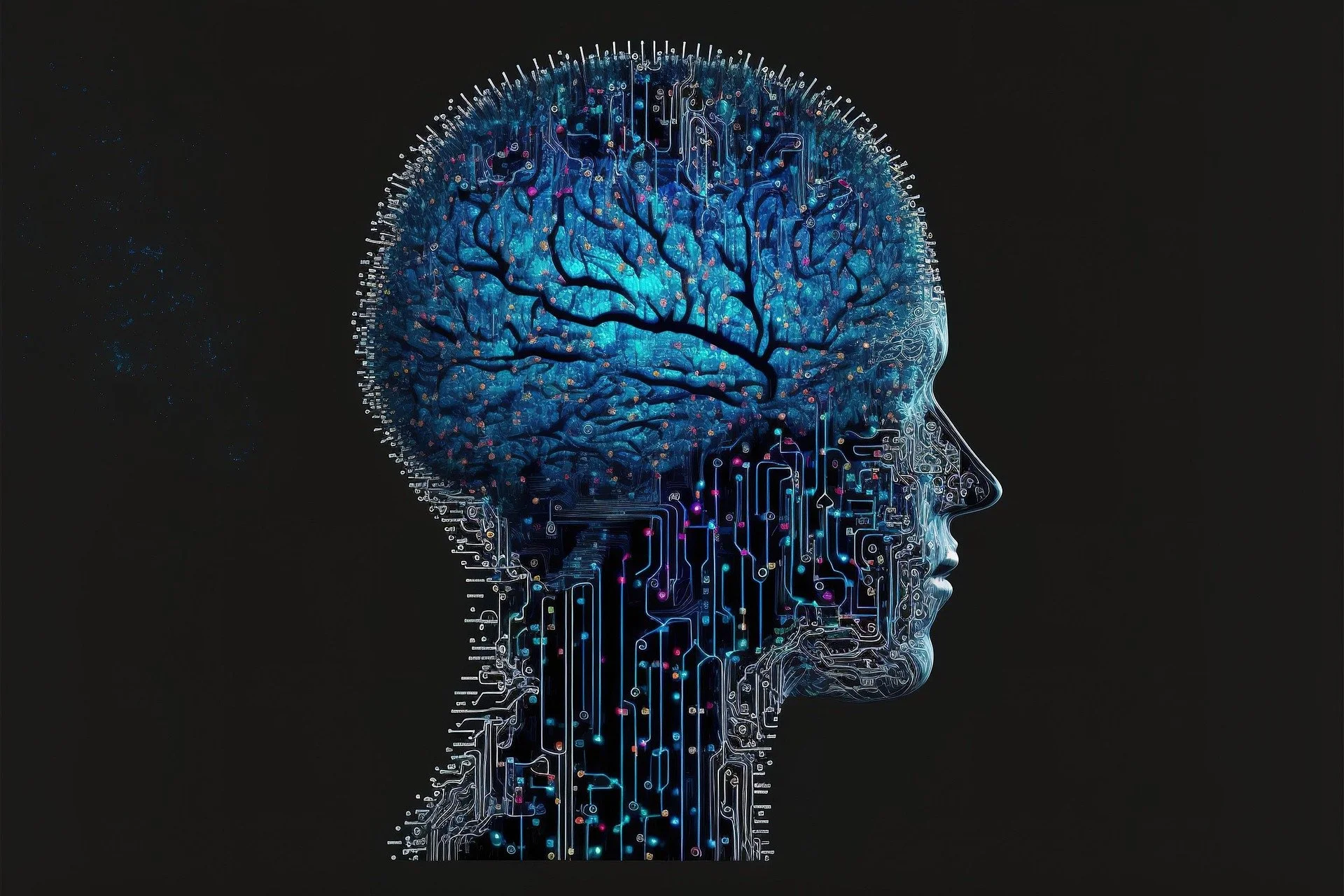
Photo courtesy of https://pixabay.com/photos/doubt-portrait-doubts-idea-think-2072602/ You can listen to the 2 part series on The Dennis Jernigan Podcast for free at http://podcast.dennisjernigan.com/e/djs-brain-surgery-part-1-carry-me-away/
“They had me at ‘stimulation’.”
Dennis Jernigan
Recently (August 22, 2025), I underwent deep Brain Stimulation (DBS). It is a surgical procedure that involves implanting electrodes in specific areas of the brain to treat movement disorders such as Parkinson’s disease, essential tremor, and dystonia.
In a mentoring session with three of my grandsons just prior to the surgery, they were very curious about the procedure and I told them my doctor could even adjust the setting for my electrodes via a cell phone. Our grandson, Cullen, then asked, “What if he butt dials you while you’re driving?” That brought our mentoring session to a giggle fest between a 10 year old, an 11 year old, a 12 year old, and a 66 year old! I have since been assured that cannot happen…but it is fun to think about!
I have had Parkinson’s officially since my diagnosis on January 28, 2019. That is 6 and a half years worth of constant tremors and foggy brain and constant exhaustion, not to mention sleepless nights and a constant battle with constipation. The little things that don’t often get mentioned but tend to cumulatively take a toll. But the results of DBS, while understanding there is no cure for Parkinson’s, meant I could have a greater quality of life and besides, they had me at stimulation! I’m a guy, what can I say?!
What exactly is PD? Parkinson’s disease (PD) is a progressive neurological disorder that affects movement, balance, and other bodily functions. The exact cause of PD is unknown, but it is believed to be a combination of genetic and environmental factors. In the brain, cells called neurons that produce dopamine gradually degenerate, leading to a shortage of this neurotransmitter.
Common symptoms of PD include Tremors (involuntary shaking), Rigidity (stiffness), Bradykinesia (slowed movements), Postural instability (difficulty with balance and walking), Slurred speech, Cognitive problems (such as memory and attention), Sleep disturbances, and very often constipation.
Essential tremor (ET) is a common neurological disorder that causes involuntary, rhythmic shaking or trembling. The exact cause of ET is unknown, but it is believed to be related to abnormalities in certain brain circuits that control movement. Genetic factors may play a role, as ET often runs in families.
What is dystonia? Dystonia in Parkinson's disease refers to involuntary, sustained muscle contractions that can cause twisting, turning, or repetitive movements. It is a common complication of Parkinson's disease, affecting up to 50% of patients. PD affects each person differently.
To be honest, I believe my Parkinson’s was brought to the surface - if not outright caused by - the loss of my dad and my following knee replacement surgery. As I look back now, I honestly believe their were earlier signs of PD as a result of these two major upheavals in my life. The knee replacement just reminded me I was nearing old age. In fact, a doctor friend of mine who has since passed away asked me what my symptoms were. His response was, “Jernigan, you don’t have Parkinson’s. You’re just getting old!” I still get a kick out of that though because it rings so true and actually make me feel better about my situation. The loss of my dad meant I was next in line, so to speak. Basically, I was drained physically and emotionally and mentally and knew that Melinda was feeling the same way. PD does not affect just the sufferer but those who care for them and I believe it is equal in comparison.
It became my desire to look into DBS after a couple of friends told me of their experience with those who had undergone the procedure and how it had positively affected their quality of life for the better. As I said before, they had me at ‘stimulation.’
In order to be considered for the procedure I had to undergo a 4 hour neurological assessment to see if I was a candidate for the surgery. Math problems. Reciting stories word for word after I was told these stories. Drawing super-detailed drawings after being given only a few seconds to view those drawings. Child-like games that involved matching pictures. This was 4 hours of torture to assess whether I showed signs of dementia. It felt more like they were trying to drive me to dementia! Patients must have a severe movement disorder that is not adequately controlled by medication. My PD was not responding as it once did to the medication so my tremors were more frequent and were growing more intense. Candidates for DBS must be in good overall health and have a reasonable life expectancy. At the time, my neurologist as well as my PCP agreed now was the time for me to pursue DBS because of the frequency and intensity of tremors and because they both felt I could live another 20 years easily.
The patient also undergoes an MRI or CT scan to identify the target brain areas. Mine took place on a Saturday morning at the OU Health Center in OKC During the actual surgery, a stereotactic frame is placed on the patient's head to guide the electrode placement. This was like a giant clamp that was bolted into my skull to ensure no sudden movements would take place during the procedure. Before the surgery, I was asked if I wanted just the areas of the incisions to be shaved. I told them to make me bald. Just for kicks.
Small incisions are made in the brain, and electrodes are inserted on both sides of the brain. The electrodes are connected to a neurostimulator during a separate surgery which took place on Monday, August 25, which is implanted under the skin near the collarbone, much like a pacemaker. Before this surgery I asked my surgeon just how he was going to get the wires down to the device in my chest. He asked, “Do you really want to know?” I said, “Yes.” He told me he would take the wires that led from the neurostimulators beneath my skin by using a long tool that basically had curves for maneuvering the set of wires just beneath my skin. What he was telling me was that he was going to be burrowing into my skin like the scarab beetles in The Brendan Fraser/Rachel Weise movie “The Mummy”. I just wanted you to get the full picture!
Of course they always have to tell you the risks that are involved with any surgery. There is always the risk of infection, bleeding, cognitive changes, side effects from stimulation, such as pain, muscle spasms, and difficulty speaking. Melinda’s main objections to the procedure was that it could possibly change my personality in some way. My response was, “How could it be worse than how PD itself has changed my personality?” She agreed with me on that one. It’s not so much that my personality changed, but the symptoms of PD had caused a suppression of my ability to joke around and even smile.
I am writing this chapter just short of the four week anniversary of my surgery. I had the implant connected to the device in my chest just a week ago (Monday) and have not had any tremors. I have begun working out again. The fog has cleared from my brain. I even led worship at our small home church Wednesday evening from the piano. I hadn’t done this in months, opting to play worship tracks from my past recordings because I was just too weak and my voice nonexistent. I just feel good now.
Patients typically stay in the hospital for 1-2 days after surgery. After one night I asked to be sent home. We can chalk that up to no rest at all even though I was in the ICU and it involved the need to be catheterized without knowing what the nurse was actually intending to do. Just suffice it to say, when someone takes a hold of your man part and begins to shove a tube the size of a soda straw into said man part, one does not enjoy an atmosphere where that is a constant possibility and reality!
Our youngest son, Ezra, recently moved home because he wanted to start his own company and because we had given him about 8 acres, including the barn in which my studio stands. He has become my landlord! It became a necessity for him to become our driver since I could no longer drive and since Melinda hates driving in the city. This also meant that, by de facto, he has become my backup care giver. I feel sorry for him…but not too much, because he is bluntly honest with me and because we share a very similar sense of humor.
This became quickly apparent as I was being released from the hospital following the initial surgery. He was assigned to help me get dressed. I was just glad to not being seen in my naked glory by one of the many female nurses who had attended to me all through the night. Because I was considered a fall-risk, I needed help with standing. His first job was to help me get into my shorts. I looked at him in my nakedness and said, “I’m so sorry you are having to see this, son.” He just laughed and proceeded to pull my first leg into my shorts. We said together, “One leg. Two legs,” and then we began to giggle like 12 year old boys as we said simultaneously as my man part came into view, “Three legs!” Melinda just looked at us and said, “There is definitely nothing wrong with your brain. Stop corrupting your son.”
Once we got home, it was decided that Ezra would sleep in the bedroom with me on a nearby cot so Melinda could get some rest on the couch. As I walked into the bedroom, it became obvious I was leaning toward the left due to the trauma I had undergone and I could understand why they thought I was a fall-risk. What I did not know was that Ezra had set up motion-detecting lights near my bed in case I got up during the night to pee (They had filled me with so many fluids in the hospital that it felt like I needed to pee non-stop for the next three days). Of course, I had to pee the very first night and thought I would not make it to the bathroom in time, but thanks to Ezra’s carefully placed lights, he was awakened and quickly made his way to his naked dad and took me by the hand and led me to the bathroom, saying, “Dad, you could fall without help.” I said, “I’m sorry you’re having to see me like this.” He just laughed and said, “It’s OK, dad. I love you. It doesn’t matter to me.” This went on for about 5 nights and then Melinda set up an air mattress in the bedroom so as not to disturb me. After the first night, she took away the motion-sensor lights and left me to my own devices! I could tell I was getting better if Melinda was getting tired of the lights coming on every time I needed to pee.
Less than three weeks later, it was time to connect the electrodes in my brain to the device implanted in my chest…and for my tremors to stop!Just before Melinda and I were headed to my neurologist’s office, we made a video for social media in which Melinda made the statement, “We’re going to get Dennis turned on today!” I immediately snorted and she realized what she had said and then said, “Next week we’ll turn him on,” and I continued to laugh and reminded folks the surgery did include the word ‘stimulation!’
Within a couple of minutes of arriving at my neurologist’s office on the morning of September 12, 2025, we were met by the young man who activates the system as a rep for MedTronics, and my tremor was nonexistent. The young man, Bryan Martray, worked with my neurologist, Dr. Cattaneo, until they came up with just the right frequency for my brain. We have a video of the very moment my tremors ceased. It was very emotional for me and for Melinda as well. Over the next week I have resumed writing, playing the piano, singing, and exercising. My brain fog is gone as well and I can smile again! It’s absolutely amazing. Even though I know I still have PD, I do not feel as enslaved to it as once did.
At times I feel I have cheated the system because I feel so good now. I am exhausted but must remember I just underwent brain surgery - intentional traumatic brain injury that I paid someone to do. My body is also exhausted from 6 and a half years of constant motion in my right extremities. I am so grateful for my surgeon, Dr. Andrew Conner, my neurologist, Dr. John Cattaneo, my PCP, Jason Dansby, and for my on-call technician, Bryan Martray and their wonderful teams. I feel so taken care of.
Since the writing of this chapter, we have set the neurotransmitter to the adaptive mode which, being translated, means I am no longer operating at a certain frequency. The device now adapts to whatever my brain needs at any given moment. While Dr. Cattaneo and Bryan were making the switch, I asked them how long the neurotransmitter would keep the symptoms of Parkinson’s at bay. Their combined response? “Until the day you die!” I feel wonderful and so grateful and thank God for giving mankind the wisdom to create such mind-blowing (pun very intended) agents of healing.